
Included as standard
Thermal Imaging Home Inspections in Northeast Florida
Advanced infrared technology, included with your home inspection. Not an upgrade, not an add-on, and not something you have to know to ask for.
Mon–Sat 8am–6pm · InterNACHI certified, Florida licensed and insured · 20+ years construction and renovation experience
Not every building concern is obvious to the eye. An infrared camera measures apparent surface temperature, which can reveal patterns a visual inspection alone would pass over — without opening a single wall or ceiling.
What a thermal imaging inspection is
Thermal imaging, or infrared thermography, uses a camera that measures and displays apparent surface temperature. Those patterns can be associated with moisture, insulation gaps, air leakage, HVAC problems or unusually warm electrical components. It complements a visual inspection — it does not see through walls, and it does not on its own confirm moisture, mould or concealed damage.
The distinction matters more than it might sound. A camera that saw through walls would be a genuinely different tool, and the claim gets made often enough that buyers arrive expecting it. What an infrared camera actually does is read the outside face of a surface. Its usefulness comes from the fact that what is happening behind a surface frequently changes the temperature of the surface itself — damp drywall evaporates and cools, a gap in insulation lets attic heat through, a loose electrical connection runs hot.
Thermal imaging is included with every standard home inspection at High Tide. You will not be offered it as an upgrade part-way through, and you do not need to request it when you book. The reasoning is simple: it takes an inspector who already knows the building to use it well, the camera is already in the truck, and a buyer should not have to know the right question to get the better inspection.
What it can see on any given day depends on conditions. A temperature difference has to exist across a surface for the camera to show anything at all, which in Northeast Florida — with an attic far hotter than the rooms below it for most of the year — is rarely the limiting factor. Access is the more common one. A wall behind a wardrobe cannot be scanned any more than it can be seen.
See the difference
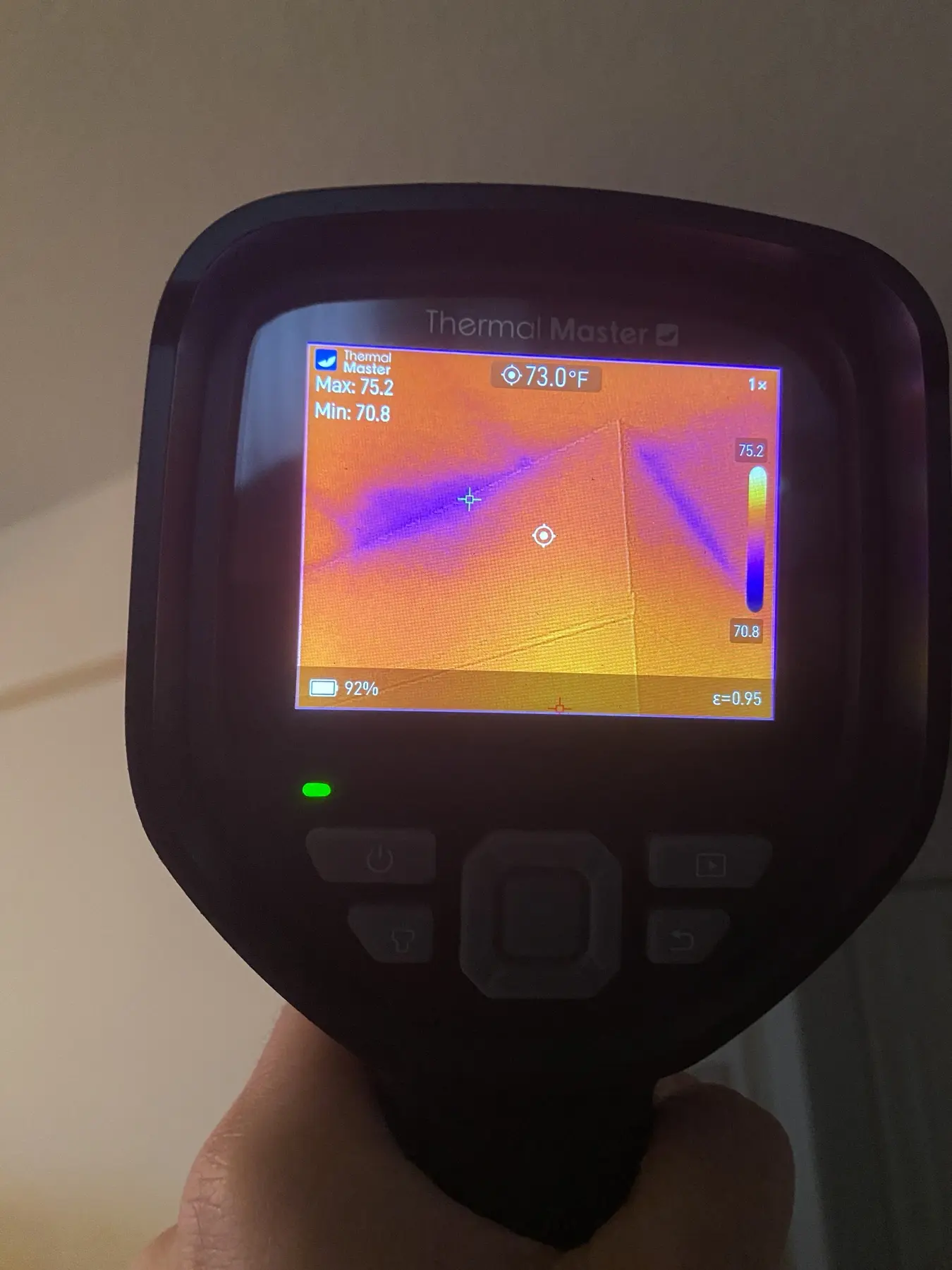
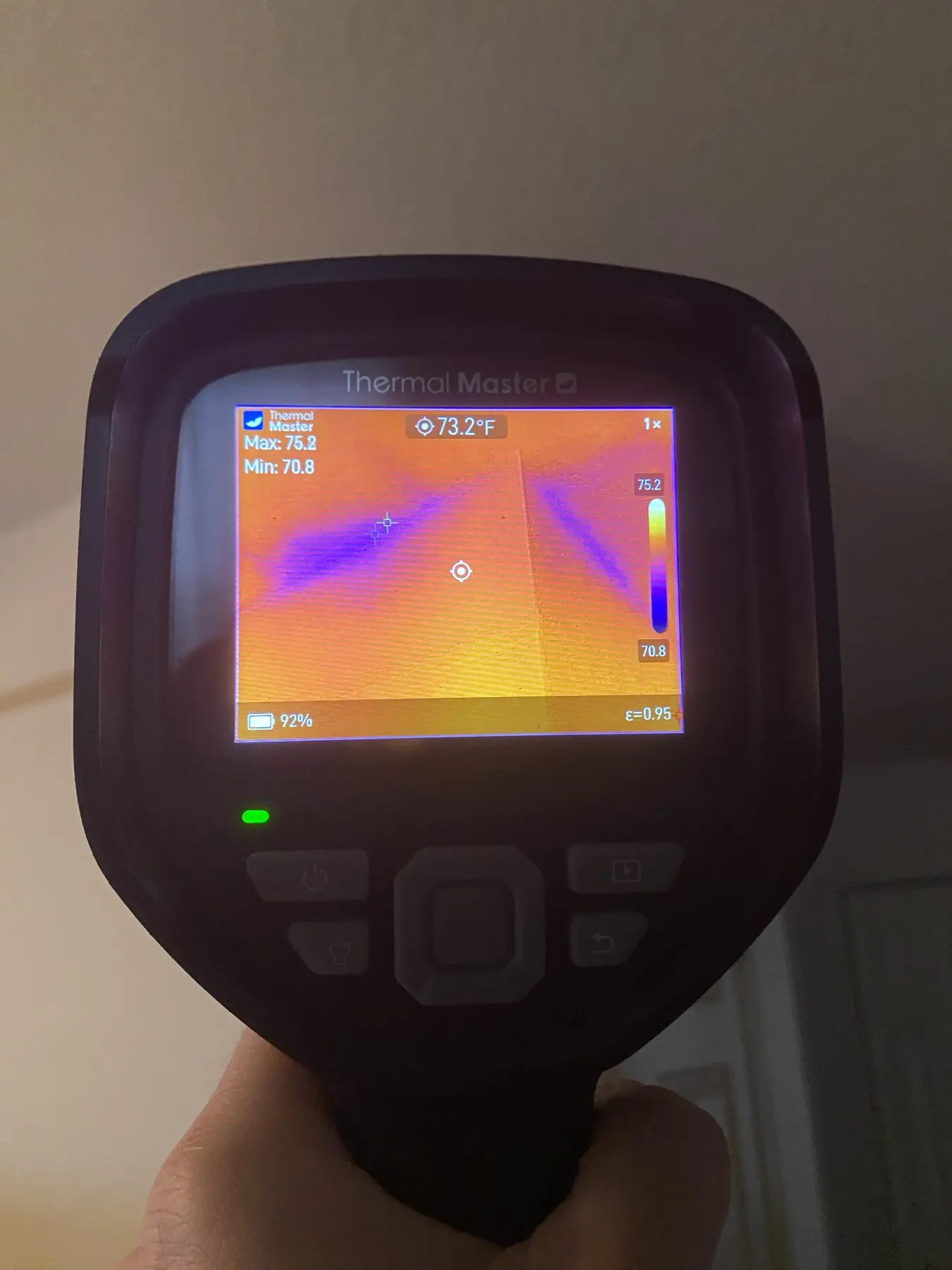
These are our own photographs, taken on inspections. Each pair is the same spot, seconds apart, in visible light and in infrared.
Drag the handle, or focus a slider and use the arrow keys, to move between the conventional photograph and the infrared image of the same spot. These are our own inspection photographs, shown at the camera’s native resolution and unaltered.
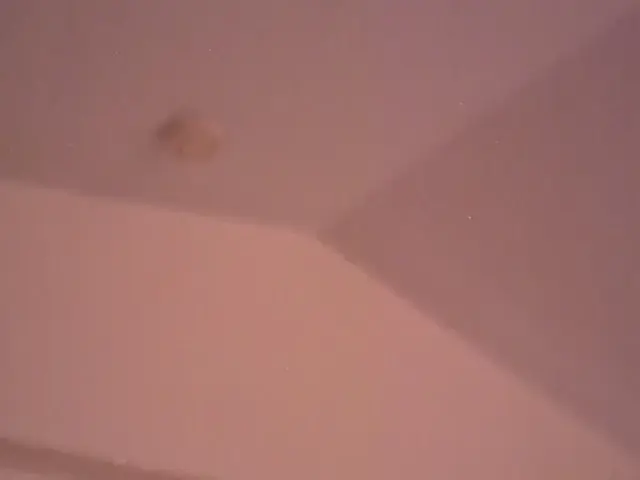
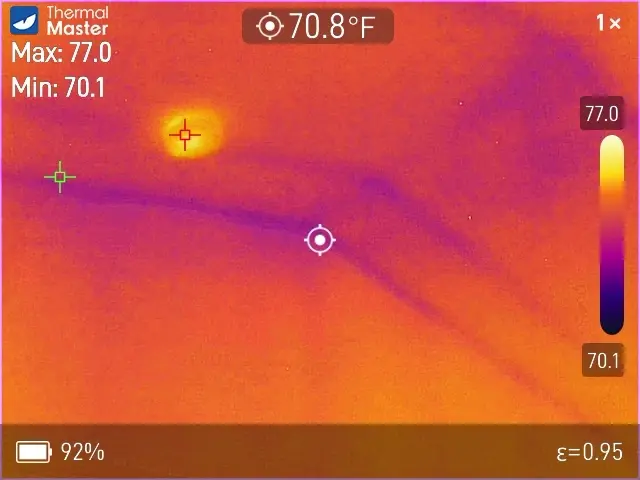
Ceiling corner — slider comparing the conventional and infrared photographs
A ceiling corner photographed normally and in infrared. Corners are where ceiling, wall and roofline meet, so they are a routine place to scan: temperature tends to vary there for ordinary construction reasons as well as unusual ones, and the camera shows both the same way.


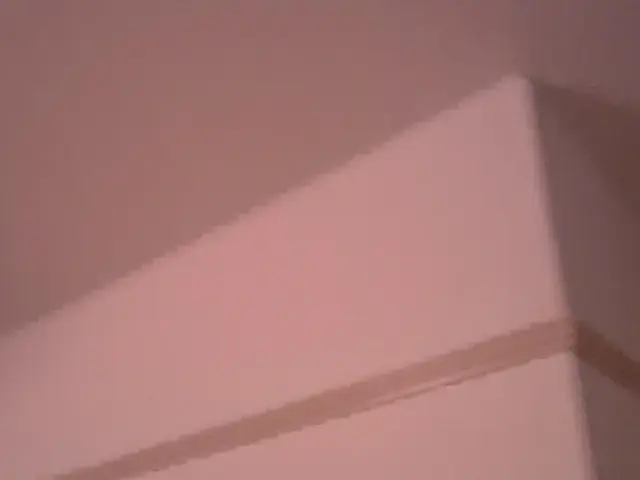
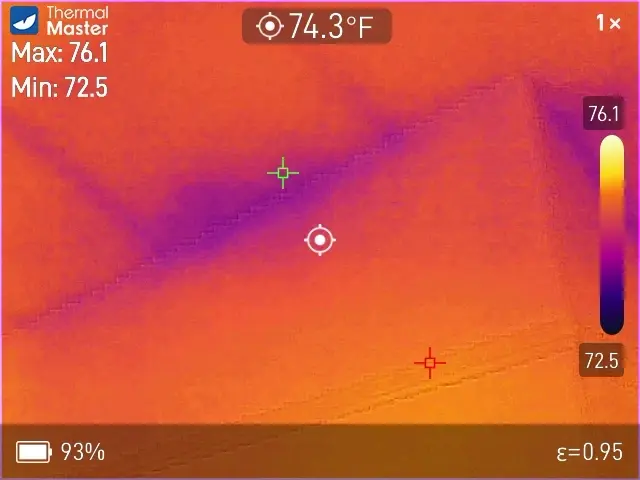
Ceiling and wall junction — slider comparing the conventional and infrared photographs
The line where a wall meets the ceiling. Insulation coverage often changes at this junction, and in a Florida attic the space above it is a great deal hotter than the room below, so the contrast across the boundary is usually visible under infrared.


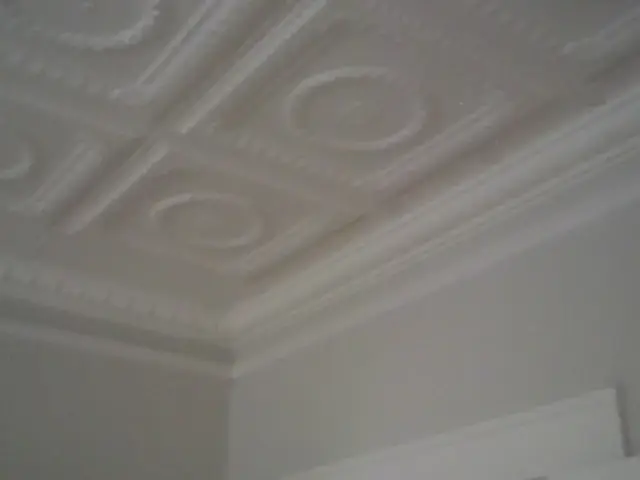
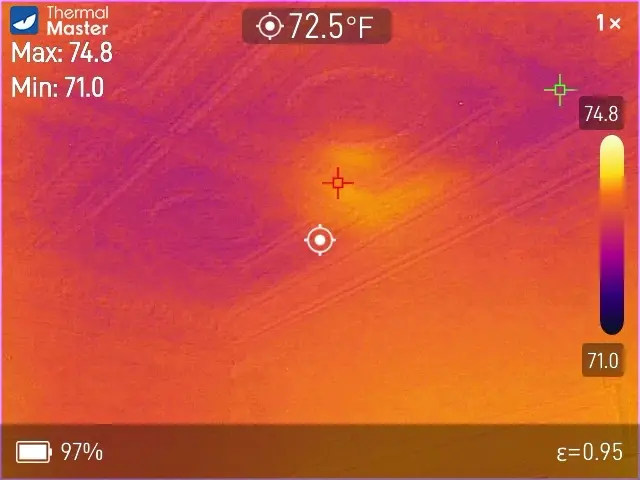
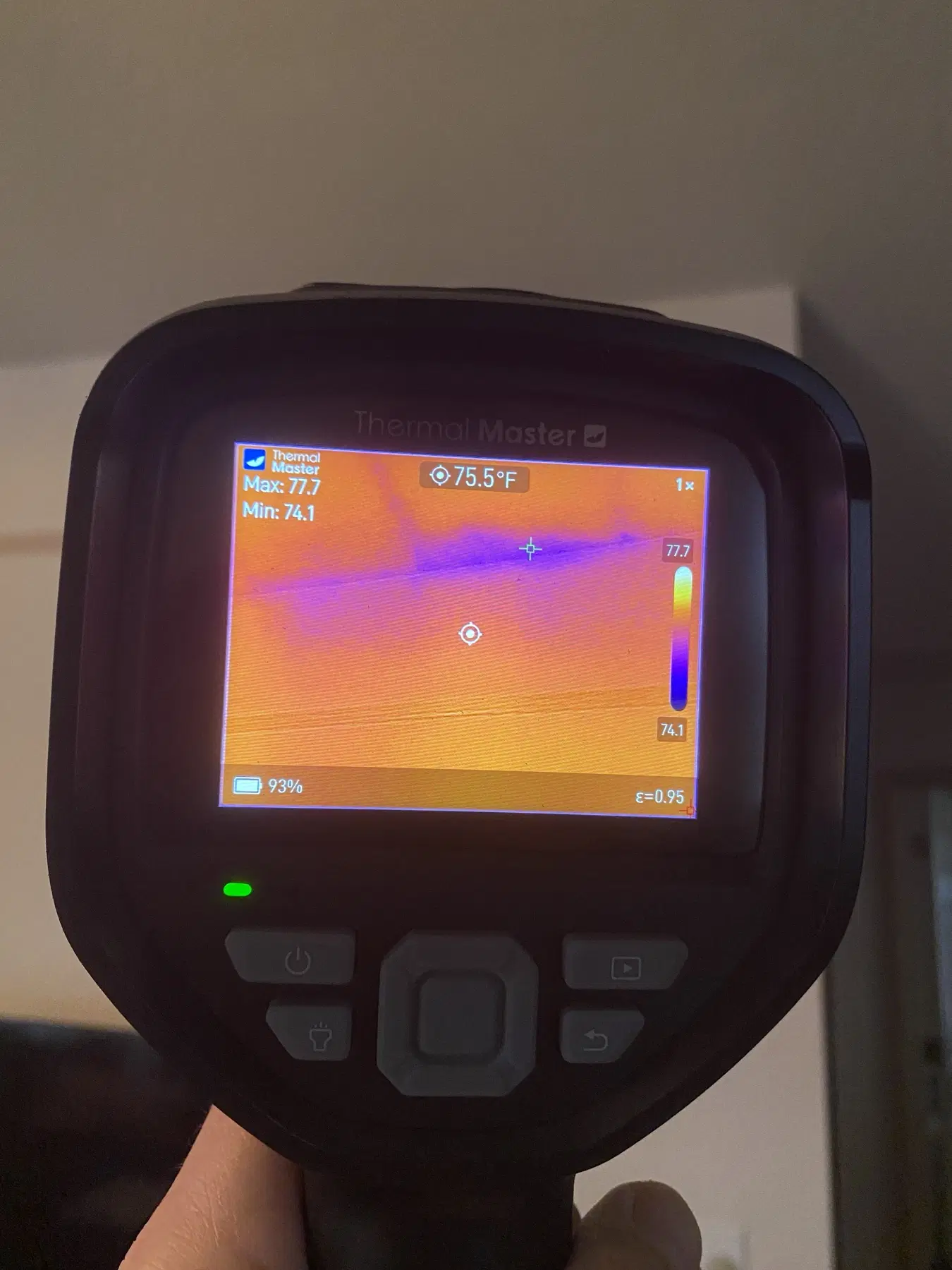
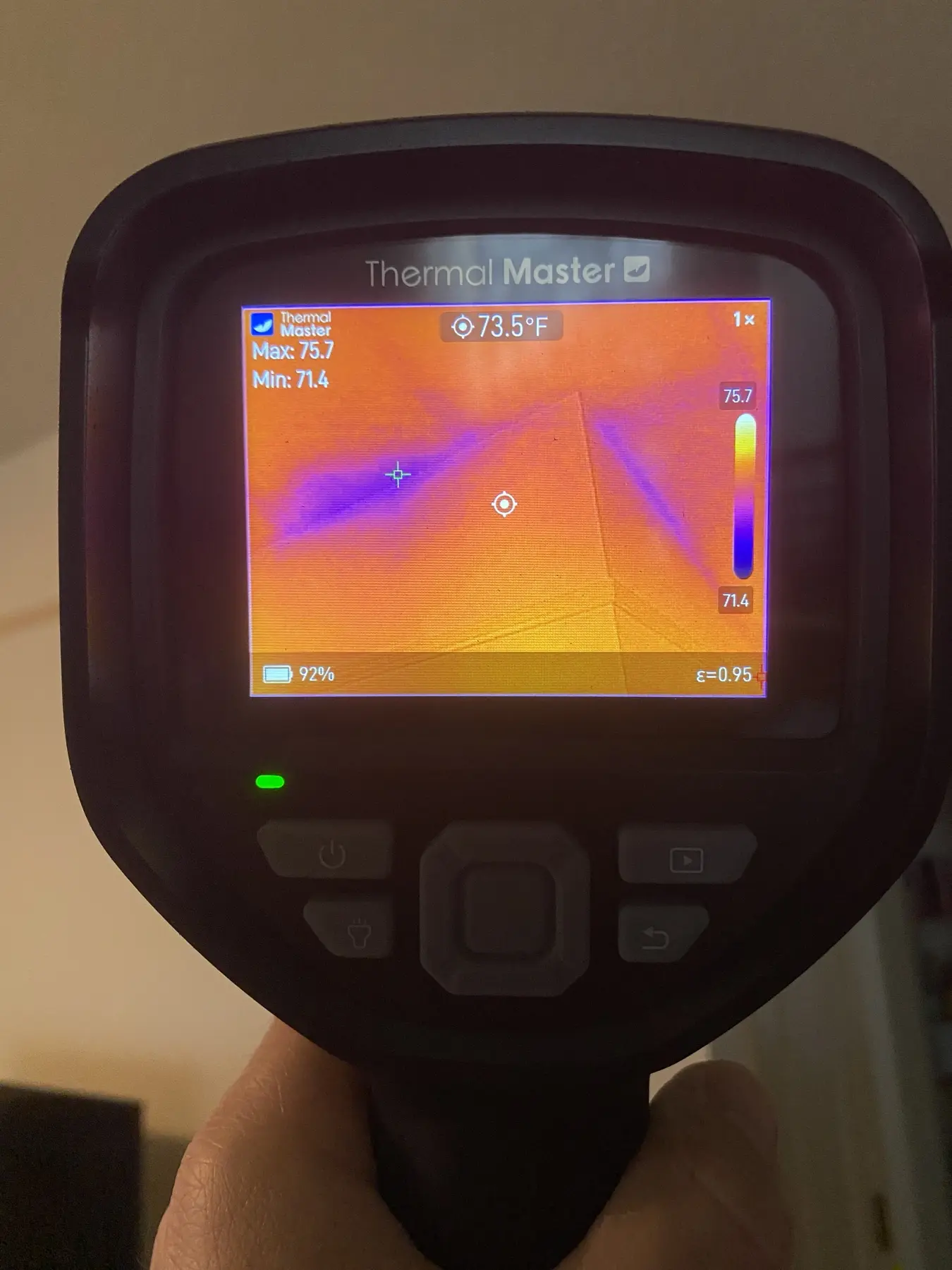
Decorative ceiling, first scan — slider comparing the conventional and infrared photographs
A textured decorative ceiling. A finish like this hides very little from the eye and nothing at all from an infrared camera, because what the camera reads is the surface itself rather than the pattern applied to it.


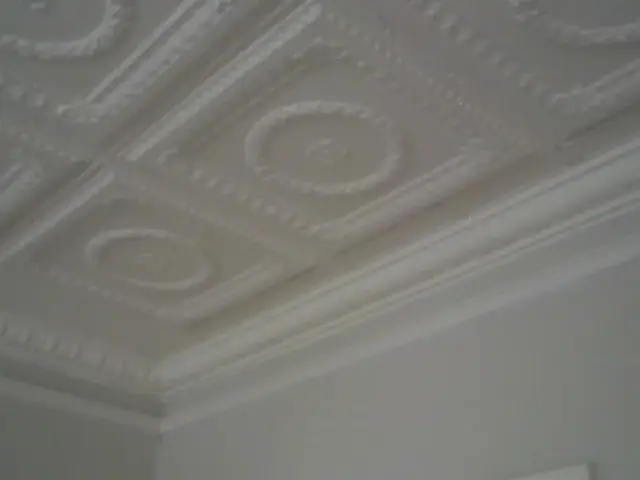
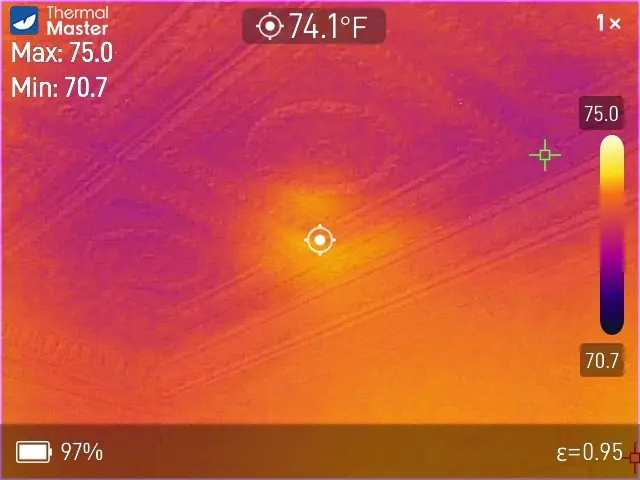
Decorative ceiling, second scan — slider comparing the conventional and infrared photographs
A second area of the same ceiling. Scanning more than one spot is the point: a single infrared frame says little on its own, and it is the comparison between areas of the same assembly that tells an inspector where to look more closely.


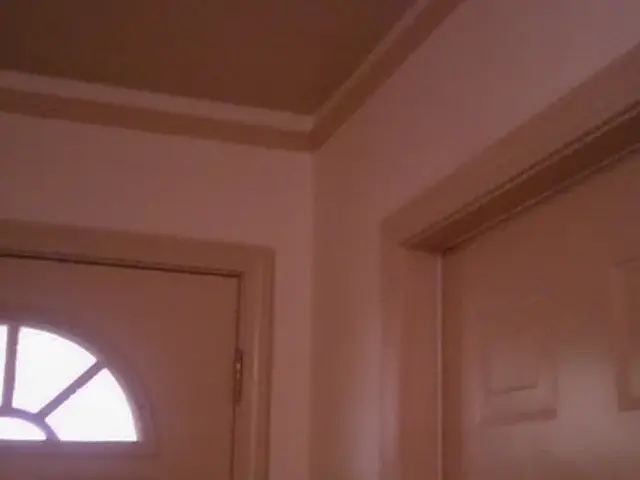
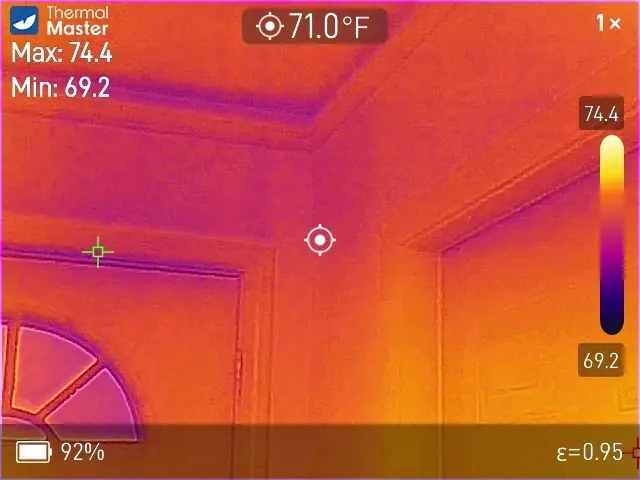
Entry door and surrounding wall — slider comparing the conventional and infrared photographs
An entry door and the wall around it. Doors and windows are openings in an otherwise continuous assembly, which is why they are worth scanning: air moves at the edges of an opening more readily than through the wall beside it.


Shown at the camera’s native resolution, with the original thermal colour scale unaltered. Temperature patterns in these images are not labelled as confirmed defects: establishing what a pattern means takes further investigation on the property itself.
What thermal imaging can help identify

Possible moisture intrusion
Unusual temperature patterns near ceilings, walls, windows and flooring can mark areas worth investigating further. Evaporating moisture tends to cool a surface, so a cool patch with no obvious cause is a reason to put a moisture meter on it — not a confirmation that water is there.

Insulation deficiencies
Missing, compressed or unevenly distributed insulation can show as temperature variation across a surface that should read consistently. In Florida the attic is usually far hotter than the room beneath it, which makes the contrast easier to see than it would be in a milder climate.

Air leakage
Patterns around windows, doors and other openings can indicate air moving where it is not meant to. Conditioned air escaping and humid outside air entering are the same problem seen from two sides, and both cost money every month the air conditioning runs.

Electrical temperature anomalies
An accessible electrical component running unusually warm is worth an electrician's attention. Infrared is useful here precisely because heat precedes failure, but the camera reports a temperature, not a fault, and the evaluation belongs to a qualified electrician.

HVAC performance
Accessible ductwork, registers and the distribution of temperature through a home can all be looked at in infrared. A room that never quite cools often shows why, though confirming the cause usually takes more than a camera.

Roof and ceiling concerns
After a roof leak or a storm, temperature differences across a ceiling can help narrow down where to investigate. This is one of the clearer uses of infrared in Florida, where the question after heavy weather is less whether water got in than where it went.
Why it matters on a Florida home
Northeast Florida gives an infrared camera unusually good conditions to work in. High humidity, heavy rainfall and air conditioning running most of the year mean there is almost always a temperature difference between inside and outside, and a strong one between a conditioned room and the attic above it. That contrast is what the camera needs.
It also means moisture has more ways in. Wind-driven rain on a coastal property in Ponte Vedra Beach, St. Augustine Beach or Jacksonville Beach reaches parts of an envelope that ordinary rainfall never touches. Older homes in St. Augustine and the Jacksonville historic neighbourhoods carry aging insulation, previous renovations of varying quality and plumbing that has been modified more than once. Newer construction in Nocatee, Palm Coast and across St. Johns County is not exempt either — insulation installed in a hurry and air sealing left unfinished are among the more common findings on a house nobody has lived in yet.
How it fits into the inspection
Walk the property and inspect it conventionally
The standard inspection happens first and does most of the work. Infrared supplements a visual inspection; it does not lead one.
Scan accessible surfaces with the infrared camera
Ceilings, walls, around windows and doors, below wet areas, at the electrical panel and across accessible mechanical equipment. Conditions matter: a meaningful temperature difference has to exist for the camera to show anything, which is rarely a problem in Florida.
Compare, rather than read a single frame
One thermal image on its own says very little. What is informative is the same assembly reading differently in one place than another, which is why the camera is used across an area rather than pointed at one spot.
Investigate anything unusual by another method
A pattern worth noting gets a moisture meter, a closer look, or a recommendation for the right specialist. An infrared image is where an investigation starts.
Document it in the report
Where a thermal image adds something, it goes in the report next to the conventional photograph, with a plain description of what it shows and what we recommend doing about it.
The equipment
Thermal imaging questions
Is thermal imaging included in a High Tide home inspection?
Yes. Infrared thermal imaging is included with every standard High Tide Inspections home inspection. You do not have to ask for it, and it is not a paid upgrade.
Does thermal imaging cost extra?
No. It is part of the standard home inspection rather than an add-on. What an inspection costs depends mostly on the size and age of the property, so call 904-806-7679 with the address and you will get a firm number before you book.
Can thermal imaging see through walls?
No, and any inspector who tells you otherwise is overselling the tool. An infrared camera measures apparent temperature at the surface it is pointed at. What makes it useful is that conditions behind a surface often change the temperature of the surface itself — but the camera is reading the wall, not seeing past it.
Can thermal imaging detect water leaks?
It can identify temperature patterns that may be associated with moisture, which is a different and more honest claim. Evaporation cools a surface, so damp material often reads cooler than the dry material around it. Confirming that water is actually present takes a moisture meter or further investigation, and that is the step that follows an infrared finding rather than being replaced by it.
Can thermal imaging detect mold?
No. Infrared does not identify mould, and no camera can. What it can do is help find the moisture conditions mould needs, which is why a thermal finding sometimes leads to a recommendation for mould testing through a licensed partner rather than to a conclusion about mould itself.
Is thermal imaging useful on new construction?
Often, yes. Under suitable conditions it can show insulation that was installed unevenly or compressed, and air sealing that was not completed, both of which are far cheaper to correct before you close than after you have lived with the power bill for a year.
Does thermal imaging damage the property?
No. It is entirely non-invasive. The camera is pointed at a surface and reads the infrared radiation coming off it. Nothing is opened, drilled, moved or touched.
Does thermal imaging replace a standard home inspection?
No, and it is not meant to. It is one method used during the inspection alongside everything else. A thermal image with no context is close to meaningless; its value comes from an inspector who already understands how the building is put together deciding where to point the camera and what the result implies.
How quickly will I receive my inspection report?
Your inspection report, with the thermal images that matter included in it, is emailed the same day or the next morning. Where a finding leads to a coordinated specialty service such as WDO or mould testing, that partner's report runs on its own timeline and takes longer.
Where does High Tide Inspections provide thermal imaging?
Across the whole service area: St. Augustine, Jacksonville, Palm Coast, Ponte Vedra Beach, Nocatee, the Duval beaches, Flagler and Volusia, and inland through Clay and Putnam. It is included with standard home inspections throughout Northeast Florida.
Thermal imaging supports a full home inspection, and is just as relevant on new construction, a roof inspection or a crawl space.
See your next home from a different perspective
Schedule a professional home inspection with infrared thermal imaging included as standard. Call William Knight directly on 904-806-7679 — Mon–Sat 8am–6pm.
Book a thermal imaging inspection in Northeast Florida
Call 904-806-7679 and you get William Knight on the phone — the inspector who will be doing the work.
Mon–Sat 8am–6pm · 20+ years construction and renovation experience · InterNACHI certified, licensed and insured