
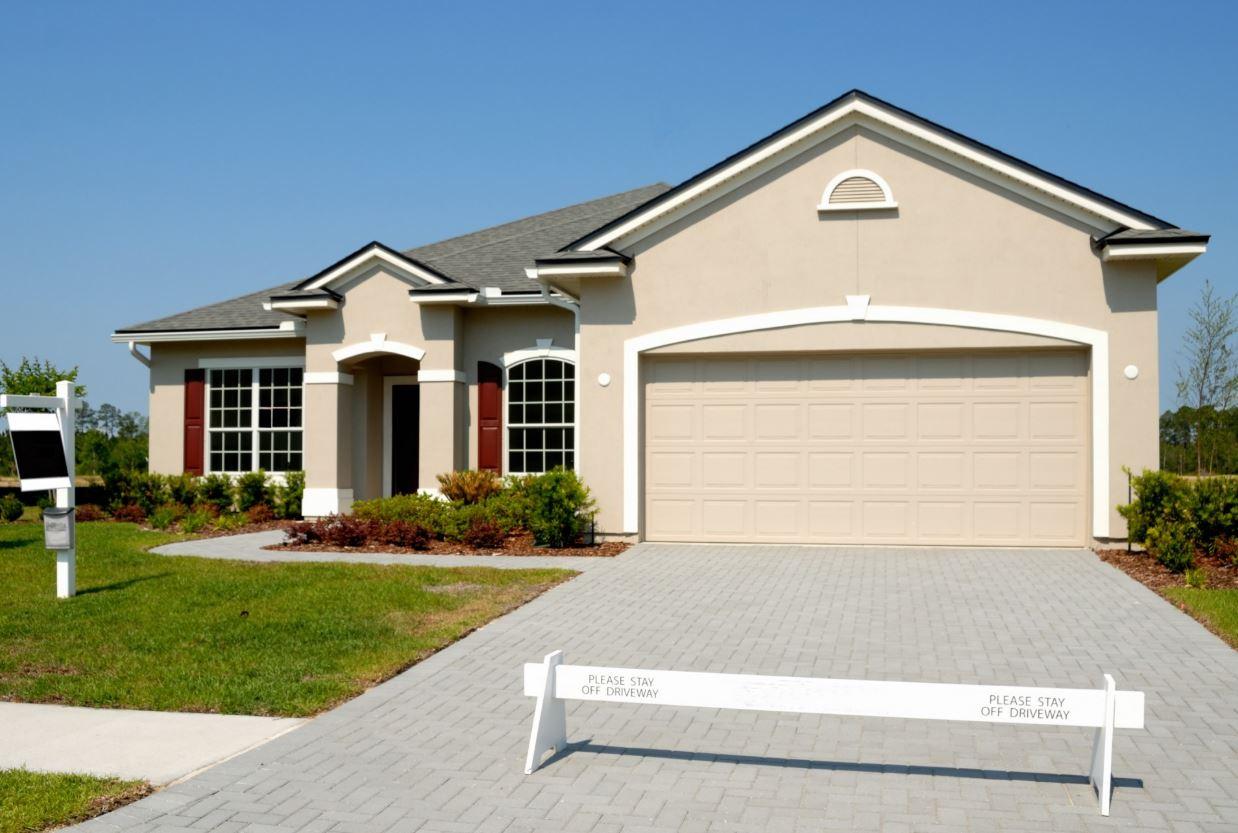
Clay County · Suburban slab
Home Inspections in Clay County, FL
Home, wind mitigation, 4-point and roof inspections for Clay County. Detailed photo report emailed quickly.
Mon–Sat 8am–6pm · InterNACHI certified, Florida licensed and insured · 20+ years construction and renovation experience
A full home inspection in Clay County covers the roof, structure, electrical, plumbing, HVAC, and every accessible system, and takes two to four hours depending on the size and age of the house. You get a detailed photo report emailed quickly. Call 904-806-7679 to schedule.
- County
- Clay County
- Building stock
- Suburban slab
- Median age
- 1980s–2000s across most of the populated county, with pre-1950 stock in Green Cove Springs and Middleburg and post-2015 growth on the corridors
- ZIP codes
- 32003, 32043, 32065, 32068, 32073, 32656
Home inspections in Clay County
Clay County is where a lot of Jacksonville's growth landed, and the housing reflects it: mile after mile of 1980s through 2000s slab-on-grade subdivision, now at the age where every original system needs replacing. Around the edges — Middleburg, western Clay, Keystone Heights — it turns rural, with older frame houses, wells, septic, and outbuildings. Those are different inspections entirely, and we run them differently. Median stock here runs 1980s–2000s across most of the populated county, with pre-1950 stock in Green Cove Springs and Middleburg and post-2015 growth on the corridors, which is the single biggest predictor of what an inspection turns up.
Suburban Clay houses are an age-of-components inspection. Roof age and permit date, HVAC and water heater age, panel brand and service size, and whether polybutylene supply is present in the late-1970s to mid-1990s range. In the attic: truss cuts, duct sealing, and bath fan termination. Rural Clay properties add crawl space moisture and termite pressure, well pressure and flow, septic condition, pier and block foundation support, and detached outbuilding wiring — which is consistently the worst electrical on those properties. Grade and drainage matter everywhere here because the soil sheds water slowly.
What comes up repeatedly on Clay County inspections
Freshwater flooding is the county-wide risk, not surge. Black Creek and Doctors Lake have both flooded homes in heavy tropical rain events, and the flood zone on a specific parcel matters far more than the neighborhood's general reputation. On the insurance side, Clay's inland position means opening protection is essentially never present, so the wind mitigation outcome hangs entirely on the roof — shape, covering compliance, deck attachment, and roof-to-wall connection. And with three permitting authorities in the county, permit research has to target the right one or it comes back empty. None of it is exotic. It is just what this county does, repeatedly.
Landmarks nearby
- · Doctors Lake
- · Black Creek
- · St. Johns River waterfront
- · Jennings State Forest
- · Camp Chowenwaw Park
- · Clay County Courthouse
Neighborhoods served
- · Oakleaf Plantation
- · Eagle Harbor
- · Fleming Island Plantation
- · Pace Island
- · Magnolia Point
- · Two Creeks
- · Keystone Heights
Conditions that shape an inspection in Clay County
- Inland county with the lowest wind design requirements in the service area
- Predominantly 1980s–2000s slab-on-grade suburban housing
- Substantial rural acreage with well and septic in the west and south
- Three permitting jurisdictions: Clay County, Orange Park, Green Cove Springs
- Black Creek and Doctors Lake flooding history
We inspect throughout Clay County, including Oakleaf Plantation, Eagle Harbor, Fleming Island Plantation, Pace Island and Magnolia Point. If you are near Doctors Lake and Black Creek, you are inside our regular service area. Zip codes covered include 32003, 32043, 32065 and 32068. Call 904-806-7679 to check a specific address.
Inspections available in Clay County
Each page covers that inspection in detail for Clay County specifically — the local building stock, Clay County permitting and insurance, and realistic costs.
Suburban slab-on-grade building stock in Clay County
1980s through 2020s slab-on-grade subdivisions with engineered truss roofs, where the systems installed at construction are now all reaching end of life together.
Suburban slab houses look uniform and inspect anything but. The pattern that matters is timing: everything in these houses was installed the same week, so everything wears out the same decade. A 2001 house is now facing its second roof, its second or third HVAC, its second water heater, and the first serious look at its original plumbing all inside a few years. Buyers see a clean, well-kept house and assume clean systems. What we look for is the age and condition of every dated component, the attic — where truss cuts and duct problems hide — and the water management around the slab edge, which is where most of the expensive foundation and moisture complaints in these neighborhoods actually start. Grade, gutters, and a leaking irrigation zone cause more slab-edge trouble here than soil ever does.
What this building stock produces on an inspection
- Original HVAC systems at fifteen to twenty-five years with rusted evaporator pans, failing capacitors, and R-22 refrigerant
- Water heaters past twelve years with no expansion tank and no drain pan on second-floor closets
- Truss modifications in attics — cut or notched webs for storage decking or duct runs
- Slab settlement and plumbing leaks under slab showing as warm spots, hairline floor cracks, or unexplained water bills
- Stucco and EIFS detail failures at band joists, control joints, and window heads on 1990s–2000s homes
- Negative grading and downspouts discharging at the foundation, driving moisture under the slab edge
- Attic insulation displaced or compressed by later cable, satellite, and HVAC work
- Chinese-manufactured drywall in a narrow 2001–2009 window, identified by corroded copper and a sulfur odor
Need an inspection in Clay County?
Call 904-806-7679 and you reach William Knight directly — the same person who will be on your roof, in your attic and at your panel, and who writes the report afterward.
Mon–Sat 8am–6pm · 20+ years construction and renovation experience · InterNACHI certified, licensed and insured
Clay County: permitting, wind, flood and insurance
Permit records for Clay County are held by Clay County Building Division (Development Services).
Unincorporated Clay County — which includes Fleming Island, Middleburg, and most of the Orange Park mailing area — permits through the Clay County Building Division out of the Development Services building in Green Cove Springs. The Town of Orange Park and the City of Green Cove Springs issue their own permits inside their municipal limits. Re-roofs, window and door replacement, HVAC changeouts, water heaters, service panel work, additions, pools, and screen enclosures all require permits. Clay has a lot of owner-built additions and detached shops on larger lots, and permit history is the first thing we want to see on anything that looks self-performed.
Clay County is inland, and it carries the lowest wind design numbers in our service area alongside Putnam. Ultimate design wind speed for a Risk Category II home sits in the low band of the Florida Building Code map — meaningfully below the coastal counties east of it. The Building Division confirms the governing value at permit review, since the contours run across the county rather than following the county line. Clay County is not on the coast and generally falls outside the Florida Building Code wind-borne debris region, so impact glazing and shutters are not code-required on typical new residential construction here. That has a direct insurance consequence buyers do not expect: on a wind mitigation report, a Clay County home usually scores no opening protection, because none was ever required. The credits available here come from roof shape, roof deck nailing, roof-to-wall connection, and roof covering compliance instead.
Clay's flooding is riverine and creek-driven, not surge-driven. Black Creek, Doctors Lake, and the St. Johns River corridor all have mapped flood zones, and Black Creek in particular has a history of rising fast in a heavy tropical rain event. Outside those corridors, most of the county is high and dry — but low-lying lots in older Middleburg subdivisions still take water.
Clay County homes get the same two insurance inspections as the coast: a 4-point on older dwellings and a wind mitigation report on form OIR-B1-1802. Requirements vary by carrier, so confirm with your insurance agent, your realtor, or your lender whether a 4-point is needed — we can include it with your inspection. Because opening protection is rarely present, the wind mit outcome in Clay usually turns on the roof. A hip roof, a re-nailed deck with 8d nails, and documented roof-to-wall straps or clips can move a premium substantially; a gable roof over a 1990s deck nailed with staples or 6d smooth-shank nails will not. That is worth knowing before you buy, not after renewal.
Design wind speed
Clay County is inland, and it carries the lowest wind design numbers in our service area alongside Putnam. Ultimate design wind speed for a Risk Category II home sits in the low band of the Florida Building Code map — meaningfully below the coastal counties east of it. The Building Division confirms the governing value at permit review, since the contours run across the county rather than following the county line.
Clay County is not on the coast and generally falls outside the Florida Building Code wind-borne debris region, so impact glazing and shutters are not code-required on typical new residential construction here. That has a direct insurance consequence buyers do not expect: on a wind mitigation report, a Clay County home usually scores no opening protection, because none was ever required. The credits available here come from roof shape, roof deck nailing, roof-to-wall connection, and roof covering compliance instead.
What this means for your policy
A wind mitigation inspection documents roof covering, roof deck attachment, roof-to-wall connection, roof geometry, secondary water resistance and opening protection. Those seven items drive the wind credits on a Florida policy. On a Clay County home it is usually the cheapest way to move a premium, and it can be bundled into the same visit as the home inspection.
Every inspection offered in Clay County
12 inspection types, all performed by William Knight across Clay County and the rest of Northeast Florida.
Buyer Inspections
Insurance Inspections
Seller Inspections
Specialty Inspections
Commercial Inspections
What Northeast Florida clients say
Published on the High Tide Inspections Google Business Profile.
“William was professional and thorough. He was able to schedule the appointment within the timeline I needed and delivered the wind mitigation inspection report that same day. I would recommend High Tide Inspections for anyone needing his services.”
D Rappvia Google · “William was extremely professional and thorough throughout the entire process. He was able to schedule the appointment within the timeline I needed and delivered both the 4-Point and full home inspection reports the following day.…”
Excerpt — Google truncates longer reviews in its listing. Read the full review on Google (opens in a new tab).
Christa Teddervia Google · “As a Realtor, I really appreciated how thorough and professional High Tide Inspections was during this new construction inspection. William provided a detailed, easy-to-read report with great photos and clear explanations.…”
Excerpt — Google truncates longer reviews in its listing. Read the full review on Google (opens in a new tab).
Coral Babb · Realtorvia Google ·
Worked with us?
A short, honest review on Google helps the next homeowner decide who to call.
Reviews are published on the High Tide Inspections Google Business Profile and are reproduced here word for word.
Clay County home inspection questions
How much does a home inspection cost in Clay County?
Most full home inspections in Clay County fall in a typical range that tracks square footage and the age of the home. Older Clay County homes take longer because there is more to document. We quote before scheduling, so you will know the number before you commit. Call 904-806-7679.
What do inspectors find most often in Clay County homes?
1980s through 2020s slab-on-grade subdivisions with engineered truss roofs, where the systems installed at construction are now all reaching end of life together. Specifically: original hvac systems at fifteen to twenty-five years with rusted evaporator pans, failing capacitors, and r-22 refrigerant, water heaters past twelve years with no expansion tank and no drain pan on second-floor closets, truss modifications in attics — cut or notched webs for storage decking or duct runs, slab settlement and plumbing leaks under slab showing as warm spots, hairline floor cracks, or unexplained water bills and stucco and eifs detail failures at band joists, control joints, and window heads on 1990s–2000s homes. Suburban Clay houses are an age-of-components inspection.
How long does a home inspection take in Clay County?
Two to four hours on site for a typical single-family home, longer for larger or older properties. The report is emailed quickly afterward — usually the same day or the next morning — because in a transaction the report is only useful if it arrives inside the inspection period.
Where do I check permit history in Clay County?
Clay County Building Division (Development Services) holds permit records for Clay County. Unincorporated Clay County — which includes Fleming Island, Middleburg, and most of the Orange Park mailing area — permits through the Clay County Building Division out of the Development Services building in Green Cove Springs. An inspection documents condition; the permit record documents whether the work was ever reviewed. On additions, re-roofs and electrical upgrades, look at both.
Does the inspection help with insurance in Clay County?
Clay County homes get the same two insurance inspections as the coast: a 4-point on older dwellings and a wind mitigation report on form OIR-B1-1802. A wind mitigation inspection is separate from a home inspection and can be bundled into the same visit, which is usually the cheapest way to get both. Ask when you call 904-806-7679.
Who performs the inspection?
High Tide Inspections — InterNACHI certified, Florida licensed and insured, Certified Wind Mitigation Inspectors, Certified Roof Inspectors and 4-point certified, with 20+ years of construction and renovation experience behind every report.
Who does the work
When you call 904-806-7679 you are talking to the lead inspector, and when the report arrives it was written by the person who was standing in the attic.

William Knight — Owner & Lead Inspector
Serving Northeast Florida from St. Augustine. Monday–Saturday, 8:00am–6:00pm.

Experienced inspectors, start to finish
The person who looks at the roof is the person who writes the report, and you can call and talk it through with us afterwards. Every inspection follows the InterNACHI Standards of Practice, so you know exactly what is covered.
InterNACHI certified, Florida licensed, insured
Certified Wind Mitigation Inspector and Certified Roof Inspector as well, which is what lets a single visit cover both the buyer's questions and the insurance carrier's forms.
20+ years construction and renovation experience
Two decades of building and renovating homes before inspecting them. That is the difference between noting a crack and telling you whether it matters, what caused it, and roughly what it takes to put right.
A detailed photo report, emailed quickly
Every finding is photographed and explained in plain language, organised so you can hand it straight to your agent, your carrier, or a contractor for pricing. No padding, no scare tactics, no upsell.
Browse every Northeast Florida service area or see all inspection types.
Schedule your Clay County inspection
Tell us the address and your closing date and we will give you a firm price and the first date we can be there.
Mon–Sat 8am–6pm · 20+ years construction and renovation experience · InterNACHI certified, licensed and insured