
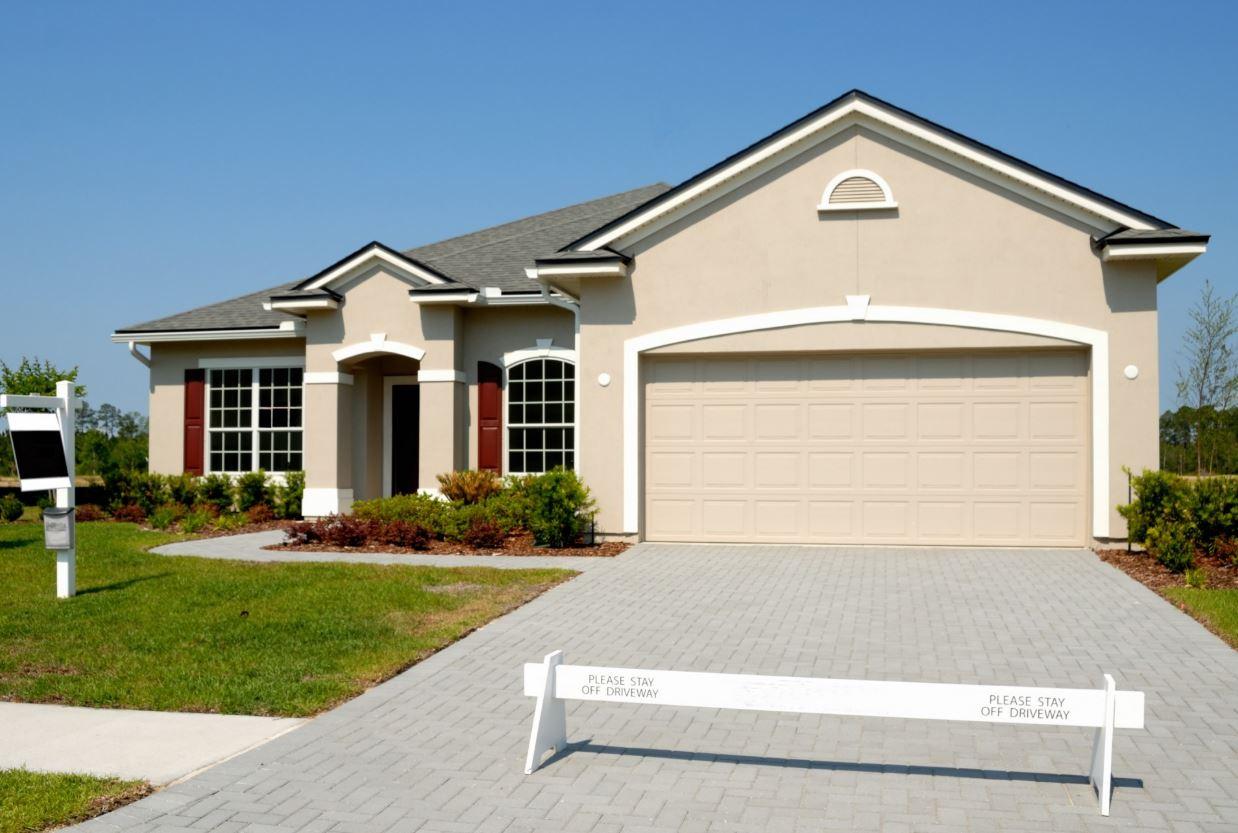
Ponte Vedra Beach · St. Johns County
New Construction Inspections in Ponte Vedra Beach, FL
Independent phase inspections on a builder's home — pre-drywall, final walkthrough and the 11-month warranty inspection — performed for you, not for the builder. We inspect your Ponte Vedra Beach home and email a detailed photo report.
Mon–Sat 8am–6pm · InterNACHI certified, Florida licensed and insured · 20+ years construction and renovation experience
A new construction inspection in Ponte Vedra Beach covers framing and structural detail before drywall, mechanical rough-ins, and then the finished work against the builder's own standard at final walkthrough. It takes one to three hours per phase and produces a phase report you can hand the builder as a punch list. Typical cost runs $300–$675 per phase visit. Demand for this one in Ponte Vedra Beach runs on the insurance calendar as much as the real estate calendar.
- Typical cost
- $300–$675per phase visit
- Building stock
- Coastal barrier
- Permitting
- St. Johns County
New Construction Inspections in Ponte Vedra Beach
Ponte Vedra Beach homes are large, expensive, and built with more exterior surface area than almost anything else in the region — which means more places for water and salt to get in. Custom roofs with multiple valleys and dead-end crickets, long stucco elevations, deep balconies, and elaborate summer kitchens all add failure points. A big house is not a low-risk house, and the inspection needs to be proportional to the number of assemblies on it. In Ponte Vedra Beach, new construction inspection findings follow the building stock: salt air, wind-borne debris exposure and the moisture detailing that coastal walls live or die on. We are InterNACHI certified, Florida licensed and insured, and we inspect every Ponte Vedra Beach home to the same standard.
Roof geometry is where we spend the time here. Complex custom roofs from the 1980s and 1990s have valleys, crickets, and tile-to-metal transitions that were detailed by hand, and those details are where leaks start. Tile roofs in particular hide underlayment failure long after the tile still looks perfect — the tile outlives the felt underneath it by a decade. On stucco elevations we check band joints, window heads, and control joints with a moisture meter rather than by eye. Salt corrosion shows up on condensers, pool equipment, exterior lighting, and hurricane connectors, and balcony and railing anchors get a hard look. On a new construction inspections specifically, that means concentrating on framing and structural detail before drywall, mechanical rough-ins, and then the finished work against the builder's own standard at final walkthrough.
What we run into repeatedly in Ponte Vedra Beach
The oceanfront strip carries real dune erosion and surge exposure, and the marsh side west of A1A floods from the Intracoastal and the Guana system rather than from the ocean. Many of the larger homes have pools, generators, elevators, boat lifts, irrigation wells, and outdoor kitchens — systems a standard inspection scope does not automatically include, and buyers should decide in advance what they want covered. Gated community architectural review boards also mean exterior repairs can require approval, which slows down post-inspection negotiation more than people expect. Across Sawgrass Players Club, Old Ponte Vedra and Marsh Landing, these are the patterns that repeat.
Neighborhoods and landmarks
We inspect throughout Ponte Vedra Beach, including the areas around TPC Sawgrass, Guana Tolomato Matanzas National Estuarine Research Reserve, Ponte Vedra Inn & Club, Mickler's Landing, Palm Valley Bridge over the Intracoastal. Median stock here runs 1970s–1990s in Old Ponte Vedra and Sawgrass, 1990s–2010s in Marsh Landing and The Plantation, with ongoing oceanfront rebuilds.
- Sawgrass Players Club
- Old Ponte Vedra
- Marsh Landing
- The Plantation at Ponte Vedra
- Sawgrass Country Club
- Palm Valley
Coastal and barrier-island building stock in Ponte Vedra Beach
On a barrier island, the ocean is a testing lab running twenty-four hours a day. Salt aerosol carries several blocks inland and it attacks anything metal — condenser coils, fasteners, panel bus bars, hurricane connectors, railing anchors. A heat pump that lasts fifteen years three miles inland routinely gives out at eight to ten on the beach. On top of that, most of this area sits inside the Florida Building Code wind-borne debris region, so opening protection is not optional on new work and its presence or absence is one of the largest single line items on a wind mitigation report. The two questions we answer on every island inspection are: what is the true remaining life on the metal systems, and can this envelope actually be documented for insurance? Both change the number a buyer should be willing to pay.
What this building stock produces on a new construction inspections
- Corroded HVAC condenser coils, fan cages, and disconnect boxes — often at half of expected service life
- Rusted roof and wall fasteners, hurricane straps, and lintels showing rust-jacking through stucco
- Stucco-over-block cracking at corners and openings, with moisture intrusion behind the coating
- Missing, undocumented, or non-code-compliant opening protection in the wind-borne debris region
- Roof edge and drip edge detailing that will not hold in uplift, and lifted or creased shingle tabs
- Elevated foundations with corroded connectors, deteriorated pile jackets, or enclosed below-BFE space
- Salt-corroded electrical panels, breakers, and exterior receptacles on the ocean side of the house
- Deck, balcony, and railing attachments with rusted or undersized anchors
When to book new construction inspections
If one of these applies to the Ponte Vedra Beach property you are looking at, this is the inspection to order.
- Your home is framed and the drywall crew is scheduled — you have days, not weeks, to see behind the walls
- The builder told you a third-party inspection 'isn't necessary because the county inspects'
- You are approaching your closing walkthrough and the punch list is being written by the builder's own rep
- Month 10 of your one-year builder warranty is here and you have not had it independently inspected
- The subdivision went up fast with rotating subcontractor crews
- You noticed nail pops, sticking doors, or hairline cracks that appeared in the first few months
- Your HVAC seems to run constantly or certain rooms never cool the same as others
- There is standing water near the foundation or the grading slopes back toward the slab
Need new construction inspections in Ponte Vedra Beach?
Call 904-806-7679 and you get William Knight directly — the same person who will be on your roof and in your attic, and who writes the report afterward.
Mon–Sat 8am–6pm · 20+ years construction and renovation experience · InterNACHI certified, licensed and insured
What new construction inspections covers
Buying new does not mean buying defect-free. A house is assembled by a rotating sequence of subcontractors working against a schedule, inspected by a municipal building official against life-safety code rather than against workmanship, and handed over during a walkthrough that mostly catches paint scuffs and a sticking door. Independent inspection on a new build is not an accusation against the builder. It is a second set of eyes at the moments when problems are still cheap to fix. The best builders in Northeast Florida have no issue with it; some will even tell you which phase they would want inspected if it were their money. A builder who refuses to allow any third-party inspection has told you something useful.
The pre-drywall phase inspection is the one that cannot be replicated later, and it is the reason to engage an inspector early rather than at closing. Once drywall goes up, the framing, the structural connectors, the plumbing rough-in, the electrical rough-in, the HVAC duct runs, the fire blocking, the window and door flashing details, and the weather-resistive barrier all disappear behind a finished surface for the life of the house. This is the window to catch cut or notched structural members, missing or under-nailed hurricane connectors, ducts crushed against framing, drain lines with insufficient fall, plumbing penetrations left unsealed, and window flashing installed out of sequence so it directs water into the wall rather than out of it. Timing is tight. It happens between rough-in approval and insulation, usually a matter of days.
The final or pre-closing inspection is a full home inspection performed on a finished house, and it produces a punch list with photographs that you can hand to the builder before you sign. Typical findings on new construction in this region: HVAC systems that never got a proper airflow balance so the back bedrooms run five degrees warm, condensate lines run without adequate fall or without a float switch, bath fans terminating into the attic instead of through the roof, missing attic insulation over the garage ceiling or at the attic access hatch, reversed polarity and missing GFCI or AFCI protection at specific circuits, roof flashings and kick-outs omitted at wall junctions, grading that slopes toward the slab, and irrigation heads spraying directly onto stucco.
Then there is the inspection almost nobody books, and it is the most valuable one on the list. Most builder warranties are tiered: roughly one year on workmanship and materials, two years on the electrical, plumbing, and HVAC distribution systems, and ten years on major structural defects. The one-year workmanship coverage is the broad one, and it is the one that expires while you are still unpacking. An inspection at the eleven-month mark, scheduled with at least three to four weeks left before the anniversary date, gives you time to submit a documented claim list while the builder is still obligated to correct at no cost. Read your specific warranty document first, because terms and claim procedures vary by builder.
What an eleven-month inspection finds is different from what the final walkthrough found, because the house has now been through a full Florida seasonal cycle. Materials have moved. Settlement has occurred. The slab has cured. The HVAC has run through a full summer at design load. Typical findings: drywall cracking at corners and above openings, nail pops, doors that no longer latch as framing shrank, grout and caulk failures at tub and shower junctions, exterior stucco cracking at control joints and window corners, roof shingle sealant that never bonded, condensate drainage problems that only show under sustained load, water heater and expansion tank issues, and grading and drainage failures that only appear after the landscaping has settled and the first heavy rain season has passed.
Practically, book the pre-drywall phase as soon as you have a framing completion date, and ask your builder's superintendent to notify you when rough-in inspections are approved so the visit lands in the right window. Book the final for a few days before your scheduled closing, not the morning of, so there is time for the builder to correct items. Book the warranty inspection at month ten to eleven and put the date in your calendar the day you close, because it is the single easiest inspection to forget and the one that costs the most to miss. Reports on all three come with photographs and are written so they can be handed directly to a builder's warranty department without translation.
How the inspection runs, step by step
Pre-drywall inspection
Scheduled after framing, rough electrical, rough plumbing and mechanical rough-in but before insulation and drywall. We document framing and truss connections, hurricane strapping and roof-to-wall hardware, notched or drilled structural members, plumbing supply and drain runs, ducts, window and door flashing, and the weather-resistive barrier. This is the only day these things are ever visible.
Pre-closing / final walkthrough inspection
Done shortly before your walkthrough with the builder. Full systems check — HVAC temperature split, every receptacle and GFCI, every window and door, grading and drainage, roof and flashing, attic insulation coverage and depth, appliances and fixtures — plus the cosmetic punch items builders routinely miss.
Documented punch list you can hand over
You get a photographed, itemized list organized so the builder's warranty department can act on it. Location, photo, description. Vague complaints get argued; documented items get fixed.
11-month warranty inspection
Scheduled in month 10 or 11 of a standard one-year builder warranty, deliberately early enough that you can submit claims before it expires. By this point the house has been through a full Florida summer and a settling cycle, and the defects that were invisible at closing have surfaced.
Report emailed with photos and priorities
PDF by email, same day or next morning, separated into warranty-claimable defects and normal owner maintenance so you are not burning credibility with the builder on items they'll rightly decline.
Follow-up verification if you want it
After the builder completes warranty work, we can return and confirm the items were actually corrected rather than closed out on paper.
Plan on one to three hours per phase. The report is a phase report you can hand the builder as a punch list, which matters when scheduled at pre-drywall and again before closing, and again before the one-year warranty expires. Same-week appointments are usually available across Ponte Vedra Beach and the surrounding St. Johns County.
New Construction Inspections cost in Ponte Vedra Beach
A new construction inspection in Ponte Vedra Beach typically runs $300–$675 per phase visit. Where a specific job lands depends on which phase — pre-drywall, pre-closing and 11-month are each priced separately, square footage and number of stories and whether you book multiple phases together, which is priced better than one-offs. We quote before we schedule, not after — you will know the number before the appointment goes on the calendar. Call 904-806-7679 and we can usually give you a figure on the phone.
Typical Northeast Florida range
$300–$675 per phase visit
What moves an inspection within that range:
- Which phase — pre-drywall, pre-closing and 11-month are each priced separately
- Square footage and number of stories
- Whether you book multiple phases together, which is priced better than one-offs
- Travel to outlying subdivisions in Nocatee, Middleburg, Palm Coast and similar growth corridors
- Site access and scheduling constraints when the builder controls the calendar
- Optional return visit to verify completed warranty repairs
That is a typical range, not a quote. Call 904-806-7679 for a firm price on your address.
St. Johns County: permitting, wind, flood and insurance
Permit records for Ponte Vedra Beach are held by St. Johns County Building Department.
Permits in unincorporated St. Johns County are issued by the St. Johns County Building Department; the City of St. Augustine and the City of St. Augustine Beach run their own permitting inside their limits, and St. Augustine adds historic-district architectural review on top. That split matters when we find work that was never inspected. Re-roofs, window and door replacements, HVAC changeouts, water heaters, electrical panel swaps, and structural additions all require a permit. When we flag an addition or an enclosed porch with no permit history, the fix is a records search at the correct jurisdiction before closing — not after. St. Johns County routes permitting through St. Johns County Building Department; pulling that history alongside a new construction inspection tells you whether past work was inspected or not.
St. Johns County sits in the coastal band of the Florida Building Code wind map. Ultimate design wind speed (Vult) for a Risk Category II home runs near 130 mph along the Atlantic and eases as you move inland toward the county's western edge. Because the contour crosses the county rather than stopping at it, the governing number is site-specific — the Building Department confirms it at permit review. St. Johns County has long designated its wind-borne debris region as the area east of Interstate 95, and the statewide Florida Building Code rule also pulls in anything within one mile of the coastal mean high water line where Vult is 130 mph or greater. In practice, that covers St. Augustine, St. Augustine Beach, Anastasia Island, Vilano, and Ponte Vedra Beach. Inside that region, every glazed opening — windows, glass doors, skylights, and the garage door — needs impact-rated product or an approved shutter system.
Flood exposure here is layered: Atlantic surge on Anastasia Island and Vilano, Intracoastal and tidal creek flooding along the San Sebastian and Tolomato, and stormwater ponding in the flatter inland subdivisions. AE and VE zones are common downtown and on the islands, and older buildings frequently predate the current flood maps.
Carriers writing in St. Johns County want two things on older homes: a 4-point inspection covering roof, electrical, plumbing, and HVAC, and a wind mitigation report on form OIR-B1-1802. Requirements vary by carrier. Confirm with your insurance agent, your realtor, or your lender whether a 4-point is needed — we can include it with your inspection. Because so much of the county is in the wind-borne debris region, the opening protection line on the wind mit form is worth real money here. Documented impact glazing or code-approved shutters on every opening moves the premium more than any other single item. Keep that in mind when you decide how quickly to schedule.
Why this is worth doing properly
- Framing, strapping, flashing and rough-ins get looked at while they are still visible and cheap to fix
- Your punch list is written by someone with no relationship to the builder
- The 11-month inspection catches settling, HVAC and drainage defects while the builder still owes you the repair
- Photographed documentation makes warranty claims far harder to dismiss
- You learn your new house — shutoffs, panel, equipment, filter sizes — from someone explaining it plainly
What Northeast Florida clients say
Published on the High Tide Inspections Google Business Profile.
“William was professional and thorough. He was able to schedule the appointment within the timeline I needed and delivered the wind mitigation inspection report that same day. I would recommend High Tide Inspections for anyone needing his services.”
D Rappvia Google · “William was extremely professional and thorough throughout the entire process. He was able to schedule the appointment within the timeline I needed and delivered both the 4-Point and full home inspection reports the following day.…”
Excerpt — Google truncates longer reviews in its listing. Read the full review on Google (opens in a new tab).
Christa Teddervia Google · “As a Realtor, I really appreciated how thorough and professional High Tide Inspections was during this new construction inspection. William provided a detailed, easy-to-read report with great photos and clear explanations.…”
Excerpt — Google truncates longer reviews in its listing. Read the full review on Google (opens in a new tab).
Coral Babb · Realtorvia Google ·
Worked with us?
A short, honest review on Google helps the next homeowner decide who to call.
Reviews are published on the High Tide Inspections Google Business Profile and are reproduced here word for word.
New Construction Inspections in Ponte Vedra Beach: common questions
How much does a new construction inspections cost in Ponte Vedra Beach?
Typically $300–$675 per phase visit in Ponte Vedra Beach. The variables are which phase — pre-drywall, pre-closing and 11-month are each priced separately, square footage and number of stories and whether you book multiple phases together, which is priced better than one-offs. Because Ponte Vedra Beach is coastal and barrier-island building stock, square footage and the number of systems in scope set the range. Call 904-806-7679 for a firm number before you book.
How long does a new construction inspections take in Ponte Vedra Beach?
One to three hours per phase. You get a phase report you can hand the builder as a punch list. We schedule across Ponte Vedra Beach and the rest of St. Johns County, and same-week appointments are normally available.
What does a new construction inspections find in Ponte Vedra Beach homes?
On a barrier island, the ocean is a testing lab running twenty-four hours a day. The findings that repeat here are corroded hvac condenser coils, fan cages, and disconnect boxes — often at half of expected service life, rusted roof and wall fasteners, hurricane straps, and lintels showing rust-jacking through stucco, stucco-over-block cracking at corners and openings, with moisture intrusion behind the coating and missing, undocumented, or non-code-compliant opening protection in the wind-borne debris region. Roof geometry is where we spend the time here.
Do I need a permit record for work found during a new construction inspections in Ponte Vedra Beach?
Permit history in St. Johns County is held by St. Johns County Building Department. An inspection tells you what condition something is in; the permit record tells you whether it was ever inspected by the jurisdiction. On additions, re-roofs, electrical upgrades and enclosed porches, checking both is worth the hour it takes.
Who performs the new construction inspections in Ponte Vedra Beach?
High Tide Inspections. We are InterNACHI certified, Florida licensed and insured, Certified Wind Mitigation Inspectors, Certified Roof Inspectors and 4-point certified, with 20+ years of construction and renovation experience behind the report. Call 904-806-7679.
Why inspect a brand new home that already passed county inspection?
Because a municipal inspection verifies minimum code compliance on specific items, often in a matter of minutes, and it does not evaluate workmanship, installation quality, or whether the system will actually perform. New homes routinely have missing insulation, disconnected or crushed ducts, improper flashing, uncorrected framing cuts and drainage that slopes the wrong way. None of that fails a code inspection.
How much does a new construction inspection cost?
Typically $300 to $675 per phase visit in Northeast Florida, driven mostly by square footage. Booking pre-drywall and pre-closing together is priced better than two separate calls. Ask about the package when you call 904-806-7679.
When exactly should I schedule the pre-drywall inspection?
After framing, roof dry-in, and rough electrical, plumbing and mechanical are complete, but before insulation goes in. That window is often only a few days long. Ask your superintendent for the drywall date the week framing finishes, and call as soon as you have it.
Can my builder refuse to let a third-party inspector on site?
Some builders push back or require you to be present, and a few restrict site access for liability reasons during active construction. Most in Northeast Florida will accommodate a scheduled inspection. Read your purchase agreement early — if there is a restriction, you want to know in month one, not the week drywall goes up.
What is an 11-month warranty inspection and why that month?
Most builder warranties on workmanship run one year from closing. Inspecting in month 10 or 11 gives you time to write up findings and submit a claim before the warranty expires. Inspect at month 12 and you have documentation for a warranty you no longer have.
Who does the work
When you call 904-806-7679 you are talking to the lead inspector, and when the report arrives it was written by the person who was standing in the attic.

William Knight — Owner & Lead Inspector
Serving Northeast Florida from St. Augustine. Monday–Saturday, 8:00am–6:00pm.


Experienced inspectors, start to finish
The person who looks at the roof is the person who writes the report, and you can call and talk it through with us afterwards. Every inspection follows the InterNACHI Standards of Practice, so you know exactly what is covered.
InterNACHI certified, Florida licensed, insured
Certified Wind Mitigation Inspector and Certified Roof Inspector as well, which is what lets a single visit cover both the buyer's questions and the insurance carrier's forms.
20+ years construction and renovation experience
Two decades of building and renovating homes before inspecting them. That is the difference between noting a crack and telling you whether it matters, what caused it, and roughly what it takes to put right.
A detailed photo report, emailed quickly
Every finding is photographed and explained in plain language, organised so you can hand it straight to your agent, your carrier, or a contractor for pricing. No padding, no scare tactics, no upsell.
Other inspections in Ponte Vedra Beach
We cover the full range of inspection work in Ponte Vedra Beach and across St. Johns County.
New Construction Inspections in nearby areas
The same inspection in neighbouring Northeast Florida communities.
Related inspections
- Home InspectionsA full, non-invasive evaluation of the home's structure, roof, electrical, plumbing, HVAC, exterior, attic and interior, documented with photos in a PDF report emailed the same day or next morning.
- Wind Mitigation InspectionsThe Florida OIR-B1-1802 Uniform Mitigation Verification Inspection — documenting the seven construction features carriers use to apply windstorm premium credits.
- Home Warranty InspectionsA condition inspection timed to a builder warranty deadline or a home warranty policy period, documenting covered defects while someone else is still contractually responsible for them.
- Foundation InspectionsA focused evaluation of slab, stem wall, block or pier foundations — crack patterns, movement, floor level, drainage and the site conditions actually causing the problem.
Looking for something else? See all home inspections in Ponte Vedra Beach, the New Construction Inspections overview, or browse every service area.
Schedule new construction inspections in Ponte Vedra Beach
Tell us the address and your closing date and we will give you a firm price and the first date we can be there.
Mon–Sat 8am–6pm · 20+ years construction and renovation experience · InterNACHI certified, licensed and insured