
Palm Coast · Flagler County
4 Point Inspections in Palm Coast, FL
The insurer-required condition report on a home's four risk systems — roof, electrical, plumbing and HVAC — used to decide whether a policy gets written or renewed. We inspect your Palm Coast home and email a detailed photo report.
Mon–Sat 8am–6pm · InterNACHI certified, Florida licensed and insured · 20+ years construction and renovation experience
A 4 point inspection in Palm Coast covers the four systems carriers actually underwrite — roof, electrical, plumbing and HVAC. It takes forty-five minutes to an hour and a half and produces the standard four-point form with dated photos of each system. Typical cost runs $100–$225 per inspection. This is one of the inspections Palm Coast owners request most, usually because an insurer or a closing date is driving the timeline.
- Typical cost
- $100–$225per inspection
- Building stock
- Block & stucco
- Permitting
- Flagler County
4 Point Inspections in Palm Coast
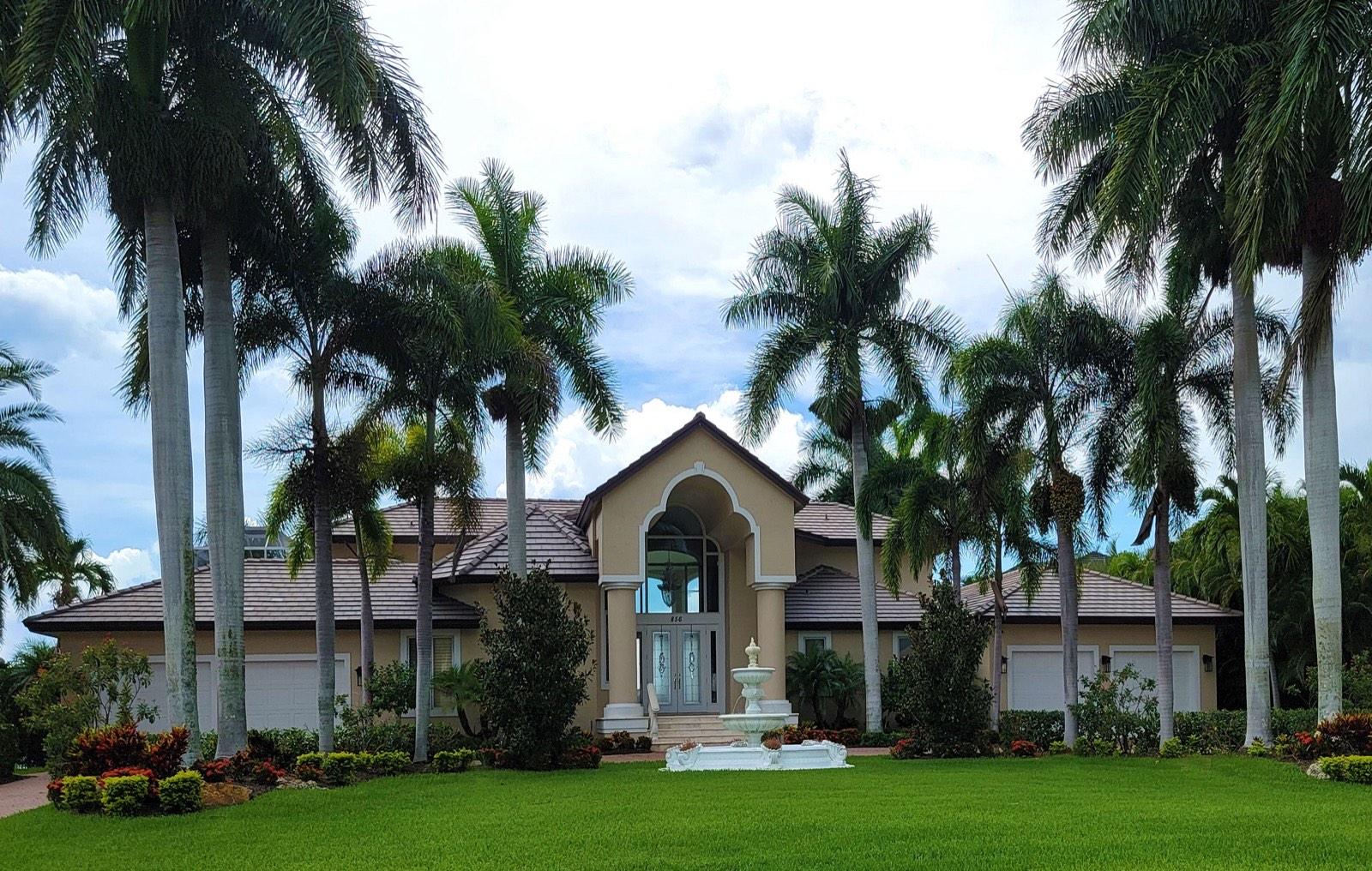
Palm Coast is the clearest example in Northeast Florida of a market defined by timing. ITT platted the lettered sections starting in the late 1960s, and the original block-and-stucco homes went up through the seventies and eighties. Those houses are structurally fine and their attached systems are all expired at once. Then a second enormous wave came 1998 to 2007 and that stock is now hitting the same wall. The inspection here is about knowing which wave you are buying. What turns up on a 4 point inspection here is shaped by concrete block and stucco construction under heavy storm exposure, much of it still carrying original roofing. We are InterNACHI certified, Florida licensed and insured, and we inspect every Palm Coast home to the same standard.
Roof first, every time. Original ITT-era homes are frequently on their first or second roof and past twenty years, which is where insurance denials start. We check covering condition, permit date, and where accessible the deck attachment, because a re-nail during a re-roof is worth real money on the wind mitigation form. Then stucco and lintels: block homes crack at control joints and corners, and rust-jacking at corroded lintel steel is common near the water. Panels include obsolete brands in the older sections. HVAC at twenty-plus with duct board plenums degrading in the attic is routine. On C and F section canal lots, the seawall gets a hard look. On a 4 point inspections specifically, that means concentrating on the four systems carriers actually underwrite — roof, electrical, plumbing and HVAC.
What we run into repeatedly in Palm Coast
The lettered sections are not interchangeable, and buyers treat them as if they are. C and F sections put you on saltwater canals with Intracoastal access — which means seawall condition, tidal flood exposure, and salt corrosion on mechanical equipment. Inland sections have none of that but often have well or septic on outlying lots and drainage swales that were never maintained. The county-wide challenge is insurance: with a huge share of the housing now aging and almost no opening protection outside the beach strip, 4-point inspections come up constantly and roof age drives whether a policy gets written at all. Requirements vary by carrier, so ask your insurance agent, your realtor, or your lender whether a 4-point is needed — we can include it with your inspection. Across Palm Harbor (F Section), Indian Trails (B Section) and Cypress Knoll (E Section), these are the patterns that repeat.
Neighborhoods and landmarks
We inspect throughout Palm Coast, including the areas around Intracoastal Waterway, Washington Oaks Gardens State Park, Graham Swamp Conservation Area, Palm Coast saltwater canal system, European Village. Median stock here runs Original ITT-era homes from the late 1970s and 1980s, a large 1998–2007 build wave, and post-2015 infill on the remaining platted lots.
- Palm Harbor (F Section)
- Indian Trails (B Section)
- Cypress Knoll (E Section)
- Belle Terre (P Section)
- Pine Grove (P Section)
- Grand Haven
- Seminole Woods
- Matanzas Woods
Concrete block and stucco, high storm exposure in Palm Coast
Block-and-stucco holds up structurally far better than frame in a storm, and that fact quietly hides the real risk: everything attached to the block is what fails. Roof coverings, windows, soffit, lanai screens, HVAC, and the electrical service all age on a normal schedule while the walls look permanent. The specific issue in this market is that a very large share of the housing was built in a compressed window, so an entire street can be at the same replacement point simultaneously — and insurers know it. When we inspect here, roof age and documentation come first, because that one item drives whether a policy gets written at all. After that, it is stucco and lintel condition, the panel, the HVAC, and on canal lots the seawall, which almost nobody looks at and which is the most expensive thing on the property to fix.
What this building stock produces on a 4 point inspections
- Original or first-replacement roofs past twenty years, a frequent trigger for insurance non-renewal
- Stucco cracking at block control joints, corners, and lintels, with rust-jacking where lintel steel is corroding
- Aging electrical panels including obsolete brands, and undersized services on homes that added a pool or shop
- Lanai and porch enclosures added later with no permit and non-rated glazing
- Original single-pane aluminum windows with failed seals, corroded tracks, and no opening protection
- HVAC systems at or past twenty years, frequently with duct board plenums degrading in the attic
- Well and septic systems on outlying lots with no recent service or water quality record
- Seawall and canal bulkhead deterioration on saltwater canal lots — cap cracking, tieback failure, soil loss behind the wall
When to book 4 point inspections
If one of these applies to the Palm Coast property you are looking at, this is the inspection to order.
- You are buying a home and need to bind coverage
- Your carrier requested one at renewal and gave you a deadline
- You are applying for a new policy and your carrier has asked for one
- You received a non-renewal notice and are shopping for a new carrier
- You are financing the purchase and your lender needs proof of insurability before closing
- The home has an original electrical panel and you do not know the brand
- The plumbing is original to a 1980s build and may be polybutylene
- The roof is 15+ years old and you need documentation of its condition and remaining life
Need 4 point inspections in Palm Coast?
Call 904-806-7679 and you get William Knight directly — the same person who will be on your roof and in your attic, and who writes the report afterward.
Mon–Sat 8am–6pm · 20+ years construction and renovation experience · InterNACHI certified, licensed and insured
What 4 point inspections covers
A 4-point inspection is often a required inspection in order to obtain, or to maintain, insurance coverage. The requirements were designed by insurance companies in order to get a better understanding of the four main aspects they are insuring: heating and cooling (HVAC), roof, plumbing, and electrical. It is a short, focused report on those four systems and nothing else.
A 4-point inspection is an insurance underwriting document, not a buyer's inspection. It reports on four systems only: roof, electrical, plumbing, and HVAC. Requirements vary by carrier, so confirm with your insurance agent, your realtor or your lender whether a 4-point is needed for the policy you are placing or renewing, and we can include it with your inspection when one is called for. The report answers a narrow question: are these four systems in serviceable condition with reasonable remaining life, and is there anything present that the carrier treats as an unacceptable risk. It says nothing about the foundation, the windows, the attic ventilation, or whether the house is a good buy. If you are purchasing, you want a full home inspection as well. The 4-point is a document your agent needs, not a substitute for due diligence.
The electrical section is where policies most often die, and the cause is usually the panel brand. Federal Pacific Electric Stab-Lok, Zinsco, Challenger, and Pushmatic panels are widely flagged by Florida carriers because of documented breaker failure-to-trip histories. Many carriers will decline outright rather than write with a condition. Sylvania-branded equipment associated with the Zinsco lineage draws the same scrutiny. The practical answer is a panel replacement by a licensed electrician under permit, typically a four-figure job, done before the inspection rather than after a declination is on record. The section also covers service capacity, evidence of aluminum branch circuit wiring in the smaller conductor sizes used in the mid-1960s to mid-1970s, knob-and-tube remnants, double-tapped breakers, open splices, and the presence of GFCI and AFCI protection.
Plumbing turns on material. Polybutylene supply piping, common in homes built from roughly the late 1970s to the mid-1990s and recognizable by its grey (sometimes blue or black) flexible tubing, is flagged by most Florida carriers. The pipe itself is not usually where it fails. Failures concentrate at the fittings and crimp connections, where oxidants in treated municipal water degrade the material from the inside and the joint lets go with no warning and no drip beforehand. That is why insurers treat it as a whole-system replacement issue rather than a repair issue. Galvanized steel supply lines are the other flag, scaling closed from the inside and reducing flow long before they leak. Cast iron drain lines, common in Jacksonville's older neighborhoods, get noted for scaling and channeling.
On the roof, insurers care about remaining service life far more than about age as a number. A twelve-year-old architectural shingle roof in good condition with clean flashings, no granule loss to speak of, and no soft decking can underwrite fine. A nine-year-old three-tab roof that has been through two named storms, with lifted tabs, exposed fasteners, and a failed pipe boot, may not. As a working rule most carriers want to see at least three years of remaining life, and many will not bind on a shingle roof past roughly the fifteen-to-twenty year mark regardless of appearance, with longer tolerances for tile and metal. The inspection documents covering type, layers, visible damage, active leakage, and an estimate of remaining life with photographs supporting the call.
HVAC is the most forgiving of the four, but not automatically. The report captures system type, age from the data plate, whether it produces adequate temperature split in operation, condition of the condensate handling, and whether the equipment has obvious deferred maintenance or improvised repairs. In Northeast Florida a fifteen-year-old air handler in an attic with a rusted primary pan, a plugged secondary line, and no float switch is a claim waiting to happen and carriers know it. Homes still heated by an original wall furnace or with no functioning heat source at all can draw a condition. Straightforward preparation helps: have the system serviced, clear the condensate lines, and make sure the equipment closet or attic platform is accessible on inspection day.
What you can actually do before the inspection is more than most people think. Replace a flagged panel. Get quotes on repiping if you have polybutylene, because a carrier will want a completion date, not an intention. Have a roofer address boots, flashings, and lifted shingles, and keep the invoice. Clear access to the panel, the attic, the water heater, and the air handler. If there was unpermitted work in the past, especially a water heater swap or a panel change, pull the permit record now. A 4-point takes roughly forty-five minutes to an hour and a half. The report is emailed with photographs of each system, and it is far easier to fix a problem before it exists on paper than to argue with an underwriter afterward.
How the inspection runs, step by step
Confirm which form your carrier wants
Some carriers use their own proprietary form with additional questions rather than the standard one. We confirm the specific form your carrier wants up front, so the report doesn't get rejected and you don't pay for a second inspection.
Roof condition and remaining life
We document covering type, age or permit date, visible condition, flashing, and evidence of active leaks in the attic. We record an estimated remaining useful life because that number is what carriers underwrite against — a roof documented with under three years remaining will generally stop a policy from being written.
Electrical system
Panel cover comes off. He records brand, model, amperage, breaker condition, double-taps, grounding and bonding, and identifies the branch wiring type. He is specifically looking for the things carriers refuse outright: Federal Pacific Stab-Lok, Zinsco and Challenger panels, knob-and-tube, cloth-insulated wiring, and aluminum branch circuit wiring.
Plumbing supply, drains and water heater
Supply piping is identified by material — copper, CPVC, PEX, galvanized steel or polybutylene — and drain lines are identified as PVC, cast iron or older material. Water heater age, condition, TPR valve and pan are recorded, plus any active leaks or evidence of past repairs. Polybutylene supply piping is the single most common plumbing decline in Florida.
HVAC system
Equipment type, age from the data plate, condition, and whether it operates. He notes the age of both the condenser and the air handler, since carriers frequently look at units past 15 to 20 years, plus condensate handling and any signs of a chronic drain pan overflow.
Form completed, photographed and emailed
You get the signed form with the required photographs of the panel, water heater, HVAC data plate and roof, usually the same day or next morning, ready to send straight to your agent.
Plan on forty-five minutes to an hour and a half. The report is the standard four-point form with dated photos of each system, which matters when requested by many carriers before they will write or renew a policy. Same-week appointments are usually available across Palm Coast and the surrounding Flagler County.
4 Point Inspections cost in Palm Coast
A 4 point inspection in Palm Coast typically runs $100–$225 per inspection. Where a specific job lands depends on whether it's bundled with a wind mitigation or full home inspection on the same visit, home size and the number of panels, subpanels and hvac systems to document and age of the home and how much of the original system is still in service. We quote before we schedule, not after — you will know the number before the appointment goes on the calendar. Call 904-806-7679 and we can usually give you a figure on the phone.
Typical Northeast Florida range
$100–$225 per inspection
What moves an inspection within that range:
- Whether it's bundled with a wind mitigation or full home inspection on the same visit
- Home size and the number of panels, subpanels and HVAC systems to document
- Age of the home and how much of the original system is still in service
- Attic and crawl space access for verifying wiring and plumbing materials
- Travel distance, especially to Putnam, Flagler and rural Clay County addresses
- Whether the carrier requires a proprietary form with extra photo requirements
That is a typical range, not a quote. Call 904-806-7679 for a firm price on your address.
Flagler County: permitting, wind, flood and insurance
Permit records for Palm Coast are held by Flagler County Building Division; the City of Palm Coast, City of Flagler Beach, and City of Bunnell each permit inside their own limits.
Flagler County permitting is genuinely split, and getting the jurisdiction right matters. The City of Palm Coast issues its own permits for the vast majority of the county's housing; Flagler Beach and Bunnell each run their own departments; and the Flagler County Building Division covers unincorporated areas. Re-roofs, window and door replacement, HVAC changeouts, water heaters, panel upgrades, seawall and dock work, additions, and pool enclosures all require permits. On Palm Coast homes we frequently find re-roofs and lanai enclosures done during the county's rapid growth years with no permit on file — worth resolving before closing. Because Palm Coast sits in Flagler County, Flagler County Building Division; the City of Palm Coast, City of Flagler Beach, and City of Bunnell each permit inside their own limits holds the permit record — worth checking against anything a 4 point inspection flags as newer than the house.
Flagler County has adopted local wind speed lines by ordinance: a 130 mph ultimate design wind speed line for Risk Category II buildings and a 140 mph line for Risk Category III, with the boundaries described by specific roads and landmarks in the county code. For a typical single-family home — Risk Category II — the practical number in eastern Flagler is 130 mph. The Building Division confirms which side of the line a given parcel falls on. The wind-borne debris region in Flagler runs along the Atlantic — within one mile of the coastal mean high water line where Vult is 130 mph or greater. That covers Flagler Beach and the barrier island strip along A1A, where impact-rated windows and doors or approved shutters are required on all openings. Much of inland Palm Coast falls outside it, which is why so many 1980s ITT-era homes here have no opening protection at all and score zero on that line of the wind mitigation form.
Flagler's exposure is split between Atlantic surge and dune erosion on the Flagler Beach side — which has been severe and repeated in recent storms — and the Intracoastal and freshwater canal systems that thread through Palm Coast's C and F sections. Palm Coast's saltwater canal homes carry both tidal flood risk and seawall condition as a real inspection item.
Flagler carriers commonly ask for a 4-point inspection on older dwellings — roof, electrical, plumbing, HVAC. Requirements vary by carrier, so confirm with your insurance agent, your realtor, or your lender whether a 4-point is needed — we can include it with your inspection. On Palm Coast's original ITT-era housing stock, it is a common request on resales in the lettered sections. Wind mitigation on form OIR-B1-1802 is where money is made or lost: roof covering compliance with a current permit date, roof deck attachment, roof-to-wall connection, and roof shape carry the credits inland, and documented impact glazing or shutters add a large one on the Flagler Beach side. That is the backdrop every 4 point inspections in Palm Coast lands against.
Why this is worth doing properly
- Your agent gets an insurer-ready form instead of a report that gets kicked back for a missing photo
- You find out which specific item is blocking coverage, so you can fix that one thing rather than guessing
- Ordering it before you close tells you whether the home is insurable at all
- The panel, piping and equipment ages you get are the same facts every carrier will ask about
- Bundling it with wind mitigation on one visit covers both sides of the insurance file in a single trip
What Northeast Florida clients say
Published on the High Tide Inspections Google Business Profile.
“William was professional and thorough. He was able to schedule the appointment within the timeline I needed and delivered the wind mitigation inspection report that same day. I would recommend High Tide Inspections for anyone needing his services.”
D Rappvia Google · “William was extremely professional and thorough throughout the entire process. He was able to schedule the appointment within the timeline I needed and delivered both the 4-Point and full home inspection reports the following day.…”
Excerpt — Google truncates longer reviews in its listing. Read the full review on Google (opens in a new tab).
Christa Teddervia Google · “As a Realtor, I really appreciated how thorough and professional High Tide Inspections was during this new construction inspection. William provided a detailed, easy-to-read report with great photos and clear explanations.…”
Excerpt — Google truncates longer reviews in its listing. Read the full review on Google (opens in a new tab).
Coral Babb · Realtorvia Google ·
Worked with us?
A short, honest review on Google helps the next homeowner decide who to call.
Reviews are published on the High Tide Inspections Google Business Profile and are reproduced here word for word.
4 Point Inspections in Palm Coast: common questions
How much does a 4 point inspections cost in Palm Coast?
Typically $100–$225 per inspection in Palm Coast. The variables are whether it's bundled with a wind mitigation or full home inspection on the same visit, home size and the number of panels, subpanels and hvac systems to document and age of the home and how much of the original system is still in service. Because Palm Coast is concrete block and stucco, high storm exposure, age and size of the home move the number more than anything else does. Call 904-806-7679 for a firm number before you book.
How long does a 4 point inspections take in Palm Coast?
Forty-five minutes to an hour and a half. You get the standard four-point form with dated photos of each system. We schedule across Palm Coast and the rest of Flagler County, and same-week appointments are normally available.
What does a 4 point inspections find in Palm Coast homes?
Block-and-stucco holds up structurally far better than frame in a storm, and that fact quietly hides the real risk: everything attached to the block is what fails. The findings that repeat here are original or first-replacement roofs past twenty years, a frequent trigger for insurance non-renewal, stucco cracking at block control joints, corners, and lintels, with rust-jacking where lintel steel is corroding, aging electrical panels including obsolete brands, and undersized services on homes that added a pool or shop and lanai and porch enclosures added later with no permit and non-rated glazing. Roof first, every time.
Do I need a permit record for work found during a 4 point inspections in Palm Coast?
Permit history in Flagler County is held by Flagler County Building Division; the City of Palm Coast, City of Flagler Beach, and City of Bunnell each permit inside their own limits. An inspection tells you what condition something is in; the permit record tells you whether it was ever inspected by the jurisdiction. On additions, re-roofs, electrical upgrades and enclosed porches, checking both is worth the hour it takes.
Who performs the 4 point inspections in Palm Coast?
High Tide Inspections. We are InterNACHI certified, Florida licensed and insured, Certified Wind Mitigation Inspectors, Certified Roof Inspectors and 4-point certified, with 20+ years of construction and renovation experience behind the report. Call 904-806-7679.
At what age does a Florida home need a 4-point inspection?
It varies by carrier, and there is no single rule that covers all of them. Requirements differ between carriers and change over time, so the only reliable answer comes from the company actually writing your policy. Ask your insurance agent, your realtor or your lender whether a 4-point is needed for the policy you are placing or renewing — and if one is called for, we can include it with your inspection on the same visit.
What fails a 4-point inspection?
The usual blockers are Federal Pacific Stab-Lok, Zinsco or Challenger electrical panels; knob-and-tube or cloth-insulated wiring; aluminum branch circuit wiring without approved repairs; polybutylene supply plumbing; a roof documented with roughly three years or less of remaining life; and any active leak in the roof, plumbing or HVAC. Most of these result in a decline rather than a higher premium.
How much does a 4-point inspection cost?
Typically $100 to $225 in Northeast Florida as a standalone visit, and less when combined with wind mitigation on the same trip. Larger homes with multiple panels or HVAC systems sit at the upper end.
How long does a 4-point inspection take?
Usually 45 minutes to an hour and a quarter. It is narrow but not shallow — the panel cover comes off, water heater and HVAC data plates get photographed, and piping materials get identified at every accessible location.
What happens if my home fails?
You get a written report naming the specific item, which is exactly what you need to fix it. A Federal Pacific panel replacement, a polybutylene repipe, or a roof replacement are all correctable, and once corrected a re-inspection documents the fix and the carrier can move forward. A 4-point is a snapshot of current condition, not a permanent verdict.
Who does the work
When you call 904-806-7679 you are talking to the lead inspector, and when the report arrives it was written by the person who was standing in the attic.

William Knight — Owner & Lead Inspector
Serving Northeast Florida from St. Augustine. Monday–Saturday, 8:00am–6:00pm.

Experienced inspectors, start to finish
The person who looks at the roof is the person who writes the report, and you can call and talk it through with us afterwards. Every inspection follows the InterNACHI Standards of Practice, so you know exactly what is covered.
InterNACHI certified, Florida licensed, insured
Certified Wind Mitigation Inspector and Certified Roof Inspector as well, which is what lets a single visit cover both the buyer's questions and the insurance carrier's forms.
20+ years construction and renovation experience
Two decades of building and renovating homes before inspecting them. That is the difference between noting a crack and telling you whether it matters, what caused it, and roughly what it takes to put right.
A detailed photo report, emailed quickly
Every finding is photographed and explained in plain language, organised so you can hand it straight to your agent, your carrier, or a contractor for pricing. No padding, no scare tactics, no upsell.
Other inspections in Palm Coast
We cover the full range of inspection work in Palm Coast and across Flagler County.
4 Point Inspections in nearby areas
The same inspection in neighbouring Northeast Florida communities.
Related inspections
- Wind Mitigation InspectionsThe Florida OIR-B1-1802 Uniform Mitigation Verification Inspection — documenting the seven construction features carriers use to apply windstorm premium credits.
- Home InspectionsA full, non-invasive evaluation of the home's structure, roof, electrical, plumbing, HVAC, exterior, attic and interior, documented with photos in a PDF report emailed the same day or next morning.
- Roof InspectionsA focused evaluation of roof covering, flashing, penetrations, drainage and attic-side evidence, with an estimated age and remaining useful life documented for insurance or purchase decisions.
- Pre-Purchase Home InspectionsA buyer-side inspection timed and scoped around your contract contingency, built to give you leverage and a clear decision before the option period expires.
Looking for something else? See all home inspections in Palm Coast, the 4 Point Inspections overview, or browse every service area.
Schedule 4 point inspections in Palm Coast
Tell us the address and your closing date and we will give you a firm price and the first date we can be there.
Mon–Sat 8am–6pm · 20+ years construction and renovation experience · InterNACHI certified, licensed and insured