
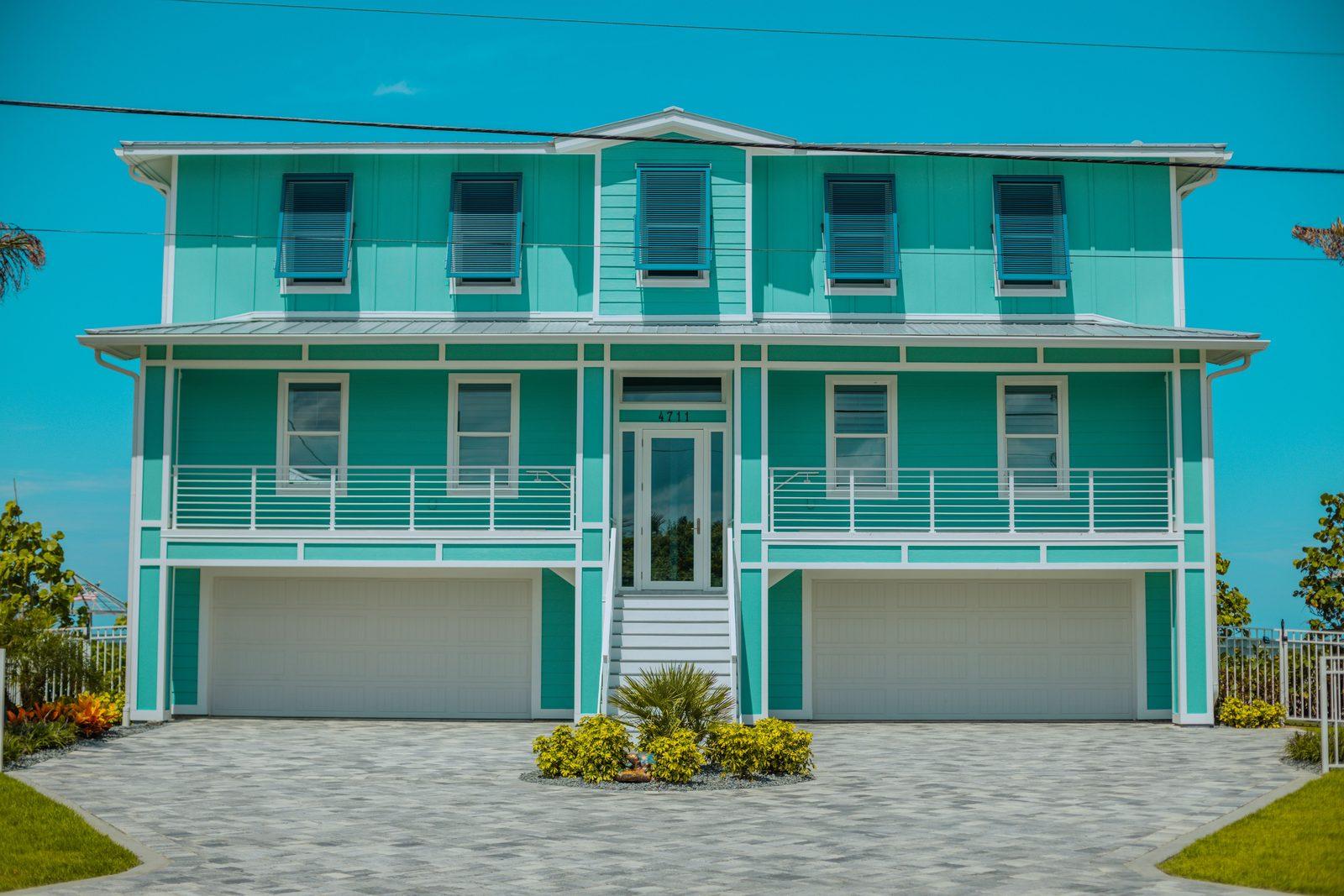
Nocatee · St. Johns County
Condo Inspections in Nocatee, FL
An inspection scoped to what you actually own inside a condominium unit, plus the shared components — envelope, balcony, common HVAC and plumbing — that drive assessments. We inspect your Nocatee home and email a detailed photo report.
Mon–Sat 8am–6pm · InterNACHI certified, Florida licensed and insured · 20+ years construction and renovation experience
A condo inspection in Nocatee covers the interior systems that are actually yours — HVAC, water heater, supply and drain lines, windows, sliders and the envelope where the unit meets common elements. It takes one to two hours depending on size and produces a report that separates unit responsibility from association responsibility. Typical cost runs $300–$675 per inspection. This one is almost always transaction-driven in Nocatee: someone is buying, listing or trying to price a decision correctly.
- Typical cost
- $300–$675per inspection
- Building stock
- Suburban slab
- Permitting
- St. Johns County
Condo Inspections in Nocatee
Nocatee is new, and buyers assume new means clean. It often does. But high-volume production building at this pace produces consistent, findable defects, and the earliest Nocatee villages are now old enough that first-generation HVAC, water heaters, and roof accessories are entering replacement territory. Whether you are buying a brand-new home before closing or a fifteen-year-old resale, the useful inspection here is one that knows exactly what production crews get wrong. Nocatee is defined by slab-on-grade construction from the 1980s through the 2000s, with original systems now at or past their service life, and that is what a condo inspection has to account for. We are InterNACHI certified, Florida licensed and insured, and we inspect every Nocatee home to the same standard.
On new and near-new homes we are in the attic looking for the things trades leave behind: unsealed duct boots, disconnected or crushed flex runs, bath fans terminating into the attic instead of through the roof, insulation blown short of the eaves, and truss webs cut for storage decking. At the exterior we check grade at the slab edge, downspout discharge, and stucco or siding termination at the band. Inside, we run every appliance, check for bathroom exhaust and dryer duct routing, and pressure-test the plumbing fixtures. On resales past twelve years, the water heater, the HVAC, and the roof accessory boots move to the top of the list. On a condo inspections specifically, that means concentrating on the interior systems that are actually yours — HVAC, water heater, supply and drain lines, windows, sliders and the envelope where the unit meets common elements.
What we run into repeatedly in Nocatee
Two things catch Nocatee buyers off guard. First, builder warranty timing — the one-year workmanship window and the ten-year structural window are the leverage points, and an inspection at eleven months is the single highest-value thing an owner of a new home can do. Second, drainage: much of Nocatee is built on land that was engineered and filled, and lot-level grading, retention pond proximity, and irrigation overspray drive most of the moisture complaints we see. Add CDD assessments to the ownership cost math, and understand that community architectural review governs most exterior changes. Across Del Webb Nocatee, Twenty Mile and Coastal Oaks, these are the patterns that repeat.
Neighborhoods and landmarks
We inspect throughout Nocatee, including the areas around Splash Water Park, Nocatee Town Center, Spray Park, Nocatee Greenway trail system. Median stock here runs 2007–present, with the earliest villages now reaching fifteen-plus years and their first major component replacements.
- Del Webb Nocatee
- Twenty Mile
- Coastal Oaks
- Greenleaf Village
- Willowcove
- Crosswater
- Daniel Park
Suburban slab-on-grade building stock in Nocatee
Suburban slab houses look uniform and inspect anything but. The pattern that matters is timing: everything in these houses was installed the same week, so everything wears out the same decade. A 2001 house is now facing its second roof, its second or third HVAC, its second water heater, and the first serious look at its original plumbing all inside a few years. Buyers see a clean, well-kept house and assume clean systems. What we look for is the age and condition of every dated component, the attic — where truss cuts and duct problems hide — and the water management around the slab edge, which is where most of the expensive foundation and moisture complaints in these neighborhoods actually start. Grade, gutters, and a leaking irrigation zone cause more slab-edge trouble here than soil ever does.
What this building stock produces on a condo inspections
- Original HVAC systems at fifteen to twenty-five years with rusted evaporator pans, failing capacitors, and R-22 refrigerant
- Water heaters past twelve years with no expansion tank and no drain pan on second-floor closets
- Truss modifications in attics — cut or notched webs for storage decking or duct runs
- Slab settlement and plumbing leaks under slab showing as warm spots, hairline floor cracks, or unexplained water bills
- Stucco and EIFS detail failures at band joists, control joints, and window heads on 1990s–2000s homes
- Negative grading and downspouts discharging at the foundation, driving moisture under the slab edge
- Attic insulation displaced or compressed by later cable, satellite, and HVAC work
- Chinese-manufactured drywall in a narrow 2001–2009 window, identified by corroded copper and a sulfur odor
When to book condo inspections
If one of these applies to the Nocatee property you are looking at, this is the inspection to order.
- You are buying a unit in a coastal or barrier island building where salt exposure is constant
- The building is over 25 years old and you have not read a reserve study
- You noticed staining on a ceiling, a balcony soffit, or around a slider track
- The association's documents mention an upcoming assessment, milestone inspection or SIRS
- The unit was renovated by a prior owner and you do not know if permits were pulled
- You are buying an investment or rental unit sight-unseen
- The unit's HVAC air handler is in a closet with no visible service history
- You are buying a ground-floor or top-floor unit, which carry different water intrusion risks than the middle
Need condo inspections in Nocatee?
Call 904-806-7679 and you get William Knight directly — the same person who will be on your roof and in your attic, and who writes the report afterward.
Mon–Sat 8am–6pm · 20+ years construction and renovation experience · InterNACHI certified, licensed and insured
What condo inspections covers
Inspecting a condominium is a different exercise from inspecting a house because you are not buying the whole building. You are buying an interior volume plus an undivided interest in everything else, and the boundary between the two is defined by the declaration of condominium, not by common sense. That document determines whether the window is yours, whether the air handler in the utility closet is yours, whether the balcony surface is yours or a limited common element you get exclusive use of but do not maintain, and where responsibility for a leak in the wall cavity actually lands. Read the declaration before the inspection if you can, and bring the questions to the walkthrough. It changes what the report needs to focus on.
Inside the unit, the inspection is a full inspection of everything within your boundary: the electrical from the unit panel through devices, the plumbing fixtures and any accessible supply and drain within the unit, the water heater, the HVAC equipment serving the unit including the condensate handling, the interior finishes, windows and doors, and any appliances included. Condo-specific findings recur with real consistency. Condensate from an air handler in an interior closet with a marginal drain line is the single most common source of unit-to-unit water damage in Florida multifamily. Failed shower pans and tub surrounds show up as ceiling staining in the unit below. Dryer vents routed through long shared chases collect lint and become a fire concern nobody owns.
Beyond your walls, the inspection can only report what is visible and accessible from common areas, and that limitation is real. Roof, structural elements, elevators, plumbing risers, building electrical service, waterproofing, and the exterior envelope belong to the association, and the association's own documents tell you far more about them than a walkthrough can. What we will document is what we can see and what it implies: staining and efflorescence on exterior walkways and balconies, spalling concrete with exposed rusting rebar, which is the classic salt-air failure on coastal buildings and is expensive to remediate, sealant failure at balcony-to-wall junctions and railing posts, ponding on flat surfaces, and corrosion on shared mechanical equipment.
Since Senate Bill 4-D was enacted in 2022 after the Champlain Towers South collapse, Florida condominium and cooperative associations have milestone inspection obligations for buildings three stories or more in height, generally required by December 31 of the year the building reaches 30 years of age based on the certificate of occupancy date, and every ten years thereafter. A 25-year trigger applies to buildings within three miles of the coastline under the original law, though HB 1021 in 2024 modified that so the earlier timeline is applied at the local enforcement agency's determination based on environmental conditions rather than automatically statewide. Associations for buildings of three or more habitable stories are also required to obtain a Structural Integrity Reserve Study covering specified structural components.
Those requirements have made document review the most financially important part of a condo purchase, and it is not something a home inspector performs. Ask for the milestone inspection report if the building is old enough to have one, the SIRS, the last two years of board meeting minutes, the current budget and reserve balances, the association's insurance declarations, and any notice of special assessment adopted or under discussion. Reserve underfunding and deferred structural work convert into special assessments that can dwarf anything in an inspection report. A unit can be in flawless condition and still be a bad purchase because the building has a seven-figure concrete restoration ahead of it. Your inspection tells you about the unit. The documents tell you about the liability.
Practically, a condo inspection runs one and a half to three hours depending on unit size and how much common area is worth examining. Schedule building access with the association or property manager in advance, because many buildings restrict contractor and vendor access to weekday hours and some require advance notice for roof or mechanical room entry. Ask specifically whether the unit's HVAC is a self-contained system, a split system with a condenser on a balcony or roof, or a connection to a central chilled water loop, because that determines both what can be inspected and who pays when it fails. High-rise units with rooftop or remote equipment often mean the mechanical portion of the report has genuine access limits, which get stated plainly rather than glossed over.
How the inspection runs, step by step
Clarify what you actually own
Before the visit we identify the unit boundary. In most Florida condominium declarations the association owns the structure, roof and exterior, and you own from the unpainted drywall inward plus your interior systems. That line determines what's your repair bill and what's an assessment.
Interior systems inspection
Electrical panel or subpanel, receptacles and GFCI protection, supply and drain plumbing, water heater age and TPR valve and pan, air handler and condensate line, windows and sliders, floors, ceilings and walls, plus built-in appliances. Water heater pans and condensate overflow switches matter far more in a stacked building where your leak becomes someone else's ceiling.
Balcony, slider and envelope check
Balcony slab edges and railings for concrete spalling and rebar corrosion, slider and window frames for water staining and failed seals, exterior wall penetrations, and stucco condition where accessible. On barrier island buildings this is where salt-driven deterioration shows up first.
Common element observation
Where accessible from the unit and common areas, We document visible condition of the roof, corridors, stairwells, parking structure, garage ceilings and exterior walls. We do not inspect the association's systems in place of a milestone or structural engineering evaluation, but visible deterioration is worth knowing about before you close.
Report emailed with photos
PDF the same day or next morning, with findings clearly split into 'your responsibility' and 'likely association responsibility' so you can read it alongside the condo documents your agent sends.
Plan on one to two hours depending on size. The report is a report that separates unit responsibility from association responsibility, which matters when you are working against a deadline — this is normally during the inspection period, alongside a review of association documents. Same-week appointments are usually available across Nocatee and the surrounding St. Johns County.
Condo Inspections cost in Nocatee
A condo inspection in Nocatee typically runs $300–$675 per inspection. Where a specific job lands depends on unit square footage and number of bedrooms and baths, age of the building and of the unit's original systems and whether the unit has an in-unit water heater and air handler or building-supplied service. We quote before we schedule, not after — you will know the number before the appointment goes on the calendar. Call 904-806-7679 and we can usually give you a figure on the phone.
Typical Northeast Florida range
$300–$675 per inspection
What moves an inspection within that range:
- Unit square footage and number of bedrooms and baths
- Age of the building and of the unit's original systems
- Whether the unit has an in-unit water heater and air handler or building-supplied service
- Balcony access and how much of the envelope is visible from the unit
- Travel distance to the building, particularly barrier island and beachfront addresses
- Add-ons such as a wind mitigation form for the unit, where the carrier will accept one
That is a typical range, not a quote. Call 904-806-7679 for a firm price on your address.
St. Johns County: permitting, wind, flood and insurance
Permit records for Nocatee are held by St. Johns County Building Department.
Permits in unincorporated St. Johns County are issued by the St. Johns County Building Department; the City of St. Augustine and the City of St. Augustine Beach run their own permitting inside their limits, and St. Augustine adds historic-district architectural review on top. That split matters when we find work that was never inspected. Re-roofs, window and door replacements, HVAC changeouts, water heaters, electrical panel swaps, and structural additions all require a permit. When we flag an addition or an enclosed porch with no permit history, the fix is a records search at the correct jurisdiction before closing — not after. Because Nocatee sits in St. Johns County, St. Johns County Building Department holds the permit record — worth checking against anything a condo inspection flags as newer than the house.
St. Johns County sits in the coastal band of the Florida Building Code wind map. Ultimate design wind speed (Vult) for a Risk Category II home runs near 130 mph along the Atlantic and eases as you move inland toward the county's western edge. Because the contour crosses the county rather than stopping at it, the governing number is site-specific — the Building Department confirms it at permit review. St. Johns County has long designated its wind-borne debris region as the area east of Interstate 95, and the statewide Florida Building Code rule also pulls in anything within one mile of the coastal mean high water line where Vult is 130 mph or greater. In practice, that covers St. Augustine, St. Augustine Beach, Anastasia Island, Vilano, and Ponte Vedra Beach. Inside that region, every glazed opening — windows, glass doors, skylights, and the garage door — needs impact-rated product or an approved shutter system.
Flood exposure here is layered: Atlantic surge on Anastasia Island and Vilano, Intracoastal and tidal creek flooding along the San Sebastian and Tolomato, and stormwater ponding in the flatter inland subdivisions. AE and VE zones are common downtown and on the islands, and older buildings frequently predate the current flood maps.
Carriers writing in St. Johns County want two things on older homes: a 4-point inspection covering roof, electrical, plumbing, and HVAC, and a wind mitigation report on form OIR-B1-1802. Requirements vary by carrier. Confirm with your insurance agent, your realtor, or your lender whether a 4-point is needed — we can include it with your inspection. Because so much of the county is in the wind-borne debris region, the opening protection line on the wind mit form is worth real money here. Documented impact glazing or code-approved shutters on every opening moves the premium more than any other single item. That is the backdrop every condo inspections in Nocatee lands against.
Why this is worth doing properly
- You know which problems are your repair bill and which are the association's before you close
- Visible envelope and balcony deterioration gives you a real question to put to the board or manager
- Water heater, air handler and shutoff conditions get documented — the three things that flood units
- You get a written baseline for a unit you may never have physically stood in
- Photographed findings support a repair request or a price conversation just like any other inspection
What Northeast Florida clients say
Published on the High Tide Inspections Google Business Profile.
“William was professional and thorough. He was able to schedule the appointment within the timeline I needed and delivered the wind mitigation inspection report that same day. I would recommend High Tide Inspections for anyone needing his services.”
D Rappvia Google · “William was extremely professional and thorough throughout the entire process. He was able to schedule the appointment within the timeline I needed and delivered both the 4-Point and full home inspection reports the following day.…”
Excerpt — Google truncates longer reviews in its listing. Read the full review on Google (opens in a new tab).
Christa Teddervia Google · “As a Realtor, I really appreciated how thorough and professional High Tide Inspections was during this new construction inspection. William provided a detailed, easy-to-read report with great photos and clear explanations.…”
Excerpt — Google truncates longer reviews in its listing. Read the full review on Google (opens in a new tab).
Coral Babb · Realtorvia Google ·
Worked with us?
A short, honest review on Google helps the next homeowner decide who to call.
Reviews are published on the High Tide Inspections Google Business Profile and are reproduced here word for word.
Condo Inspections in Nocatee: common questions
How much does a condo inspections cost in Nocatee?
Typically $300–$675 per inspection in Nocatee. The variables are unit square footage and number of bedrooms and baths, age of the building and of the unit's original systems and whether the unit has an in-unit water heater and air handler or building-supplied service. Because Nocatee is suburban slab-on-grade building stock, age and size of the home move the number more than anything else does. Call 904-806-7679 for a firm number before you book.
How long does a condo inspections take in Nocatee?
One to two hours depending on size. You get a report that separates unit responsibility from association responsibility. We schedule across Nocatee and the rest of St. Johns County, and same-week appointments are normally available.
What does a condo inspections find in Nocatee homes?
Suburban slab houses look uniform and inspect anything but. The findings that repeat here are original hvac systems at fifteen to twenty-five years with rusted evaporator pans, failing capacitors, and r-22 refrigerant, water heaters past twelve years with no expansion tank and no drain pan on second-floor closets, truss modifications in attics — cut or notched webs for storage decking or duct runs and slab settlement and plumbing leaks under slab showing as warm spots, hairline floor cracks, or unexplained water bills. On new and near-new homes we are in the attic looking for the things trades leave behind: unsealed duct boots, disconnected or crushed flex runs, bath fans terminating into the attic instead of through the roof, insulation blown short of the eaves, and truss webs cut for storage decking.
Do I need a permit record for work found during a condo inspections in Nocatee?
Permit history in St. Johns County is held by St. Johns County Building Department. An inspection tells you what condition something is in; the permit record tells you whether it was ever inspected by the jurisdiction. On additions, re-roofs, electrical upgrades and enclosed porches, checking both is worth the hour it takes.
Who performs the condo inspections in Nocatee?
High Tide Inspections. We are InterNACHI certified, Florida licensed and insured, Certified Wind Mitigation Inspectors, Certified Roof Inspectors and 4-point certified, with 20+ years of construction and renovation experience behind the report. Call 904-806-7679.
How much does a condo inspection cost?
Typically $300 to $675 in Northeast Florida, mostly driven by square footage. Small one-bedroom units sit at the low end; large multi-bedroom units in older buildings sit at the high end. Call 904-806-7679 with the unit size and building age for a firm number.
How long does a condo inspection take?
Usually one and a half to two and a half hours. Less exterior and no attic or crawl space means less ground to cover than a single-family home, but the interior systems get the same scrutiny and the balcony and envelope check adds time in older coastal buildings.
What does a condo inspection not cover?
It is not a substitute for the association's structural or milestone inspection, and it does not evaluate the building's reserves, elevators, fire suppression system, roof interior, or below-grade parking structure engineering. Those live in the association's documents and its own engineering reports — read both.
Do I need an inspection if the association maintains the exterior?
Yes. The association maintaining the roof does not mean the roof is in good shape, and a deteriorating building means special assessments you will pay. Separately, everything inside your unit — panel, plumbing, water heater, air handler, windows in many declarations — is entirely yours.
Can I get wind mitigation credits on a condo?
Sometimes. Unit owner HO-6 policies generally cover the interior and personal property, and the building's wind features are usually reflected in the association's master policy. Some carriers will apply opening-protection credits for impact-rated windows and doors on the unit. Ask your agent what your specific carrier accepts before ordering the form.
Who does the work
When you call 904-806-7679 you are talking to the lead inspector, and when the report arrives it was written by the person who was standing in the attic.

William Knight — Owner & Lead Inspector
Serving Northeast Florida from St. Augustine. Monday–Saturday, 8:00am–6:00pm.


Experienced inspectors, start to finish
The person who looks at the roof is the person who writes the report, and you can call and talk it through with us afterwards. Every inspection follows the InterNACHI Standards of Practice, so you know exactly what is covered.
InterNACHI certified, Florida licensed, insured
Certified Wind Mitigation Inspector and Certified Roof Inspector as well, which is what lets a single visit cover both the buyer's questions and the insurance carrier's forms.
20+ years construction and renovation experience
Two decades of building and renovating homes before inspecting them. That is the difference between noting a crack and telling you whether it matters, what caused it, and roughly what it takes to put right.
A detailed photo report, emailed quickly
Every finding is photographed and explained in plain language, organised so you can hand it straight to your agent, your carrier, or a contractor for pricing. No padding, no scare tactics, no upsell.
Other inspections in Nocatee
We cover the full range of inspection work in Nocatee and across St. Johns County.
Condo Inspections in nearby areas
The same inspection in neighbouring Northeast Florida communities.
Related inspections
- Home InspectionsA full, non-invasive evaluation of the home's structure, roof, electrical, plumbing, HVAC, exterior, attic and interior, documented with photos in a PDF report emailed the same day or next morning.
- Pre-Purchase Home InspectionsA buyer-side inspection timed and scoped around your contract contingency, built to give you leverage and a clear decision before the option period expires.
- Wind Mitigation InspectionsThe Florida OIR-B1-1802 Uniform Mitigation Verification Inspection — documenting the seven construction features carriers use to apply windstorm premium credits.
- 4 Point InspectionsThe insurer-required condition report on a home's four risk systems — roof, electrical, plumbing and HVAC — used to decide whether a policy gets written or renewed.
Looking for something else? See all home inspections in Nocatee, the Condo Inspections overview, or browse every service area.
Schedule condo inspections in Nocatee
Tell us the address and your closing date and we will give you a firm price and the first date we can be there.
Mon–Sat 8am–6pm · 20+ years construction and renovation experience · InterNACHI certified, licensed and insured