
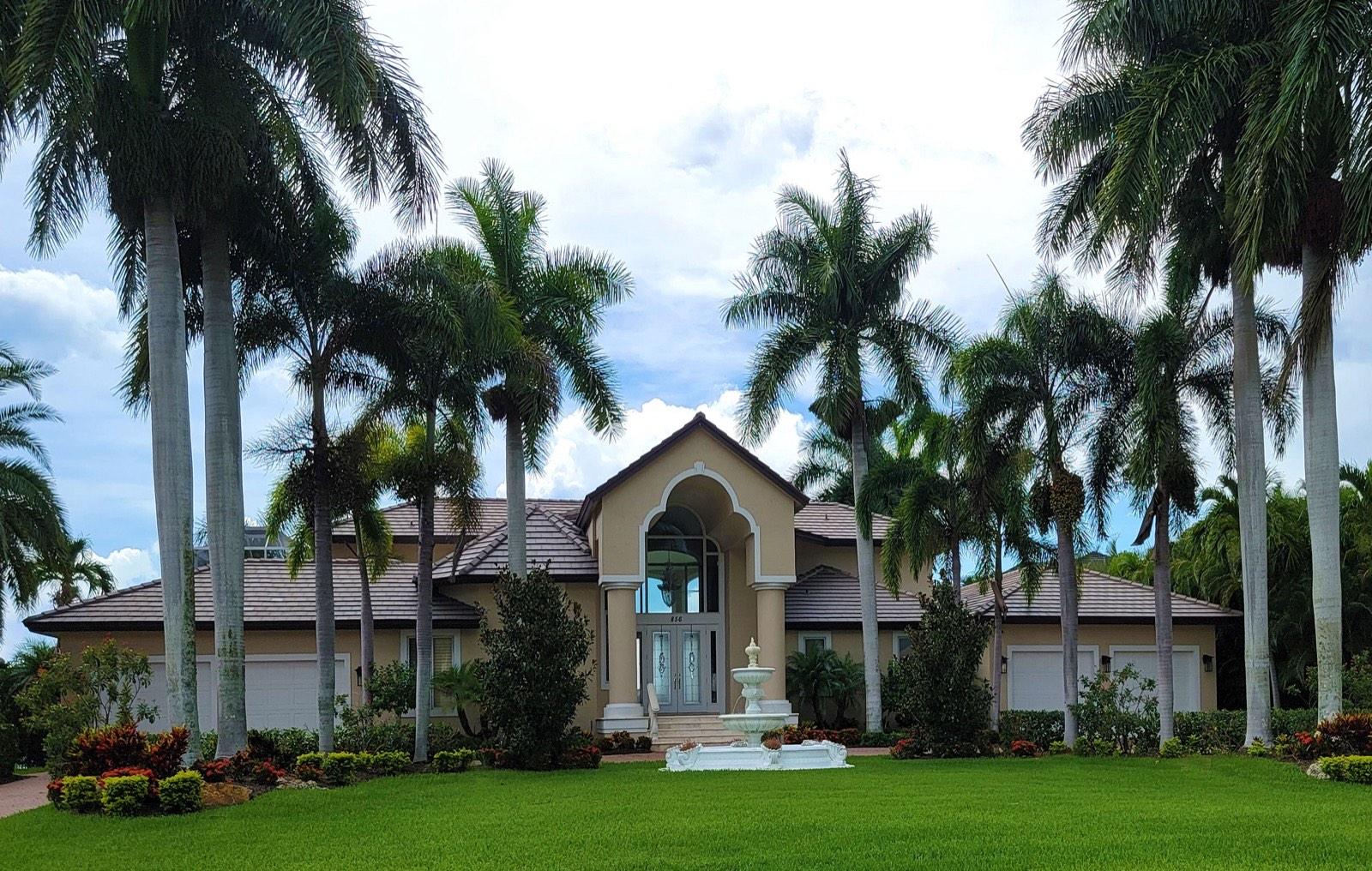
Jacksonville Beach · Duval County
Pre-Listing Inspections in Jacksonville Beach, FL
A seller-side inspection done before the home hits the market, so you find and price the problems on your schedule instead of discovering them during a buyer's contingency period. We inspect your Jacksonville Beach home and email a detailed photo report.
Mon–Sat 8am–6pm · InterNACHI certified, Florida licensed and insured · 20+ years construction and renovation experience
A pre-listing home inspection in Jacksonville Beach covers everything a buyer's inspector will find, so you decide what to fix and what to disclose before it becomes a negotiation. It takes two to four hours on site and produces a full report you control, ahead of any offer. Typical cost runs $300–$675 per inspection. This one is almost always transaction-driven in Jacksonville Beach: someone is buying, listing or trying to price a decision correctly.
- Typical cost
- $300–$675per inspection
- Building stock
- Coastal barrier
- Permitting
- Duval County
Pre-Listing Inspections in Jacksonville Beach
Jacksonville Beach has been rebuilding itself lot by lot for twenty-five years, so a single street can hold a 1958 cottage, a 1994 townhome, and a 2022 three-story build. The old stock has been remodeled in layers and the new stock was built fast. Both need real scrutiny, and both are inside the salt zone where mechanical and electrical equipment ages faster than the manufacturer ever intended. What turns up on a pre-listing home inspection here is shaped by salt air, wind-borne debris exposure and the moisture detailing that coastal walls live or die on. We are InterNACHI certified, Florida licensed and insured, and we inspect every Jacksonville Beach home to the same standard.
Corrosion drives the findings. Condensers within a few blocks of the ocean routinely show heavy coil and cabinet corrosion at eight to twelve years, and we check disconnects, panel bus, and exterior receptacles for the same. On older cottages we look for rusting lintels cracking stucco, roof fasteners and drip edge that will not hold uplift, and 1960s-era wiring left in place behind a cosmetic remodel. On canal lots in Isle of Palms, the seawall and bulkhead get a look — cap cracking, tieback distress, and soil loss behind the wall are expensive and easy to miss. Opening protection gets documented in detail for the wind mitigation form. On a pre-listing home inspections specifically, that means concentrating on everything a buyer's inspector will find, so you decide what to fix and what to disclose before it becomes a negotiation.
What we run into repeatedly in Jacksonville Beach
Flood zones on the island are real and vary sharply block to block, and older cottages were built well below current base flood elevation. Layered remodeling is the other problem: additions, enclosed porches, and converted ground-level space done over decades, often without permits, and permitted through the City of Jacksonville Beach rather than the City of Jacksonville — a distinction that trips up out-of-town buyers and even some agents. Roof age is the insurance chokepoint here, and on the island an older roof brings non-renewal pressure regardless of condition. Requirements vary by carrier, so ask your insurance agent, your realtor, or your lender whether a 4-point is needed — we can include it with your inspection. Across Isle of Palms, South Beach and Oceanwalk, these are the patterns that repeat.
Neighborhoods and landmarks
We inspect throughout Jacksonville Beach, including the areas around Jacksonville Beach Pier, Beaches Town Center, Pablo Creek, SeaWalk Pavilion, Intracoastal Waterway. Median stock here runs 1950s–1970s original cottages, 1980s–1990s condo and townhome development, and continuous teardown-rebuild infill since 2000.
- Isle of Palms
- South Beach
- Oceanwalk
- Jacksonville Beach Historic District
- Sunrise
- Palm Cove
Coastal and barrier-island building stock in Jacksonville Beach
On a barrier island, the ocean is a testing lab running twenty-four hours a day. Salt aerosol carries several blocks inland and it attacks anything metal — condenser coils, fasteners, panel bus bars, hurricane connectors, railing anchors. A heat pump that lasts fifteen years three miles inland routinely gives out at eight to ten on the beach. On top of that, most of this area sits inside the Florida Building Code wind-borne debris region, so opening protection is not optional on new work and its presence or absence is one of the largest single line items on a wind mitigation report. The two questions we answer on every island inspection are: what is the true remaining life on the metal systems, and can this envelope actually be documented for insurance? Both change the number a buyer should be willing to pay.
What this building stock produces on a pre-listing home inspections
- Corroded HVAC condenser coils, fan cages, and disconnect boxes — often at half of expected service life
- Rusted roof and wall fasteners, hurricane straps, and lintels showing rust-jacking through stucco
- Stucco-over-block cracking at corners and openings, with moisture intrusion behind the coating
- Missing, undocumented, or non-code-compliant opening protection in the wind-borne debris region
- Roof edge and drip edge detailing that will not hold in uplift, and lifted or creased shingle tabs
- Elevated foundations with corroded connectors, deteriorated pile jackets, or enclosed below-BFE space
- Salt-corroded electrical panels, breakers, and exterior receptacles on the ocean side of the house
- Deck, balcony, and railing attachments with rusted or undersized anchors
When to book pre-listing home inspections
If one of these applies to the Jacksonville Beach property you are looking at, this is the inspection to order.
- You are preparing to list and want to know what a buyer's inspector will report
- A previous contract already fell through after the buyer's inspection
- You have owned the home 15+ years and have lost track of what's been deferred
- You inherited the property and have never lived in it
- You want to price the home accurately rather than defending it later
- Your agent is recommending pre-list repairs and you want to know which ones actually matter
- The roof is aging and you need to know whether it will survive a buyer's insurance underwriting
- You are selling as-is and want the disclosure to be complete enough that nobody can come back at you
Need pre-listing home inspections in Jacksonville Beach?
Call 904-806-7679 and you get William Knight directly — the same person who will be on your roof and in your attic, and who writes the report afterward.
Mon–Sat 8am–6pm · 20+ years construction and renovation experience · InterNACHI certified, licensed and insured
What pre-listing home inspections covers
A pre-listing inspection is the same technical inspection a buyer would order, run before the house goes on the market, with the report in the seller's hands instead of the buyer's. The reason to do it is control. Findings discovered during a buyer's contingency period arrive at the worst possible moment: the buyer is emotionally invested, alarmed, working from an unfamiliar report, and advised by an agent whose job is to extract concessions. The same findings discovered eight weeks earlier are just a list of jobs you can price, schedule, and complete at market rates with contractors you chose. The technical content does not change. The negotiating position around it changes completely.
The economics are straightforward. A buyer's repair credit request is rarely calibrated to actual cost. It is calibrated to the buyer's anxiety about the unknown, which means a failed water heater becomes a request that covers the water heater plus a cushion for whatever else might be wrong with the plumbing. Sellers who fix items in advance pay the invoice. Sellers who negotiate them under contract pay the invoice plus the cushion, frequently with a rush premium because the closing date is fixed. There is also the deal that simply dies. A buyer who opens a report full of unexpected items during a ten-day contingency often walks, and the listing goes back on the market with a stale days-on-market count and an unspoken question attached to it.
Florida sellers have a disclosure obligation. Under the standard established in Johnson v. Davis, a seller of residential property must disclose facts materially affecting the value of the property that are not readily observable and are not known to the buyer. A pre-listing inspection interacts with that duty directly: once you know about a material defect, it is disclosable. That is a feature, not a trap. Undisclosed known defects are how sellers end up in litigation after closing. A seller who inspects, repairs, documents the repair, and discloses the history has converted a liability into evidence of a maintained home. A seller who inspects and then conceals a material finding has created a much worse problem than the finding itself.
Not everything on the report should be fixed, and a good inspector will help you sort it. Fix safety issues and anything involving active water: electrical hazards, missing GFCI protection in wet locations, a roof leak, a failing water heater relief valve, an unsealed gas connection. Fix cheap items that read as neglect and cost little: a broken window seal, torn screens, a missing dryer vent termination, a loose handrail, a stuck exterior door. Consider fixing major items only if the market is soft or the item will block financing or insurance, since a Federal Pacific panel or a nineteen-year-old shingle roof will surface in the buyer's insurance quote regardless of what your listing says. Leave true cosmetics alone and let the price reflect them.
The insurance-side documents deserve the same forward thinking. Requirements vary by carrier, so confirm with your insurance agent, your realtor or your lender whether the buyer's carrier will want a 4-point inspection, and expect the wind mitigation form on OIR-B1-1802 to affect what their premium looks like. Deals in Florida now fall apart over insurability at a rate that surprises out-of-state sellers. Having a current wind mitigation form and a clean 4-point available in the listing package removes a common late-stage failure point and gives the buyer's agent something concrete to put in front of an underwriter early. It also lets you correct an underwriting flag on your schedule instead of during a financing contingency.
Timing: schedule the inspection four to eight weeks before you intend to list. That leaves room to get quotes, book trades who are not available tomorrow, permit anything that needs permitting, and complete work before photography. Expect three to four hours on site and a report the same day or next morning. Keep every invoice and permit record in one folder. When a buyer's inspector later flags something you already addressed, a dated invoice from a licensed contractor ends the conversation immediately. That folder is worth more in negotiation than any amount of listing copy.
How the inspection runs, step by step
Inspect before the listing photos, not after
The whole point is lead time. Booking before you list means any repair you decide to make happens on your schedule, with your contractor, at a normal price — not under a seven-day deadline with a buyer's agent forwarding you emergency quotes.
Full-scope inspection, buyer's standard
We inspect to the same InterNACHI Standards of Practice a buyer's inspector will use: roof, exterior, structure, attic, electrical, plumbing, HVAC, interior and accessible appliances, all photographed. There is no softer 'seller version' — a soft report is worthless because it won't match the report the buyer gets.
Findings triaged for selling decisions
The report separates safety and insurability items that will genuinely threaten a deal, items a buyer will almost certainly ask about, and cosmetic or maintenance notes that rarely move a negotiation. That's the difference between fixing three things and fixing thirty.
Insurability check on the aging systems
Roof age and remaining life, panel brand, plumbing supply material and HVAC age get documented specifically because a buyer's carrier is going to ask. Finding out now that the house has a Federal Pacific panel is far better than finding out when a buyer's insurance falls through in week three.
Report emailed with photos
PDF the same day or next morning. What you do with it is your decision — fix items, price them in, or disclose them — but you are making that decision with information, and Florida disclosure obligations mean you'll want to talk to your agent about what gets shared.
Optional re-inspection after repairs
If you make repairs, a short return visit documents that the work was completed. Handing a buyer photographed proof of a corrected item removes an argument before it starts.
Plan on two to four hours on site. The report is a full report you control, ahead of any offer, which matters when you are working against a deadline — this is normally by sellers before the listing goes live. Same-week appointments are usually available across Jacksonville Beach and the surrounding Duval County.
Pre-Listing Home Inspections cost in Jacksonville Beach
A pre-listing home inspection in Jacksonville Beach typically runs $300–$675 per inspection. Where a specific job lands depends on square footage and number of stories, age of the home and how many original systems remain and crawl space versus slab-on-grade and whether the crawl is enterable. We quote before we schedule, not after — you will know the number before the appointment goes on the calendar. Call 904-806-7679 and we can usually give you a figure on the phone.
Typical Northeast Florida range
$300–$675 per inspection
What moves an inspection within that range:
- Square footage and number of stories
- Age of the home and how many original systems remain
- Crawl space versus slab-on-grade and whether the crawl is enterable
- Detached garage, guest house, pool or outbuildings added to the scope
- Travel distance within Northeast Florida
- Optional post-repair re-inspection, priced as a short return visit
That is a typical range, not a quote. Call 904-806-7679 for a firm price on your address.
Duval County: permitting, wind, flood and insurance
Permit records for Jacksonville Beach are held by City of Jacksonville Building Inspection Division (the Beaches cities and Baldwin run their own building departments).
Most of Duval County permits through the City of Jacksonville Building Inspection Division under the consolidated city-county government, but Jacksonville Beach, Neptune Beach, Atlantic Beach, and Baldwin maintain their own building departments — so a permit search has to be run against the right jurisdiction. Re-roofs, window and door replacements, HVAC and water heater changeouts, panel upgrades, additions, and enclosures all require permits. In older Jacksonville neighborhoods we regularly find converted garages, enclosed carports, and finished attics with no permit record. That is not automatically a deal-killer, but it is a real question for the buyer and for the next carrier. A pre-listing home inspection in Duval County is worth pairing with a permit search at City of Jacksonville Building Inspection Division (the Beaches cities and Baldwin run their own building departments), since unpermitted work is one of the few things an inspection cannot see directly.
Duval County is one of the few places in Florida where the wind speed line is written into local ordinance rather than read off a map. For Risk Category II buildings, the ultimate design wind speed is 130 mph east of a demarcation line that runs up the middle of the St. Johns River to I-95 at the Fuller Warren Bridge and then north along I-95 to the county line, and 125 mph west of it. Two houses a few blocks apart can be designed to different numbers. The Florida Building Code puts a site in the wind-borne debris region when it is within one mile of the coastal mean high water line with Vult of 130 mph or greater, or anywhere Vult reaches 140 mph. In Duval that captures Jacksonville Beach, Neptune Beach, Atlantic Beach, and the oceanfront strip — where impact glazing or approved shutters are required on all openings. Most of inland Jacksonville falls outside it, which is exactly why so many mainland homes have unprotected openings and lose the opening-protection credit on a wind mitigation report.
Duval's flood story is river-driven as much as ocean-driven. The St. Johns backs up on a strong onshore wind, and the tidal creeks — Trout River, Cedar, Ortega, Pottsburg — flood neighborhoods well inland of the beach. San Marco, Riverside, and the Northside creek corridors all carry AE zone areas, and a good deal of that housing was built before flood mapping existed.
Insurers writing in Duval commonly ask for a 4-point inspection — roof, electrical, plumbing, HVAC. Requirements vary by carrier, so confirm with your insurance agent, your realtor, or your lender whether a 4-point is needed — we can include it with your inspection. Jacksonville's older housing stock trips 4-point underwriting rules constantly: cast-iron drain lines, polybutylene supply, aluminum branch wiring, and Federal Pacific or Zinsco panels are all common declines. A wind mitigation report on form OIR-B1-1802 documents roof shape, roof deck attachment, roof-to-wall connection, roof covering compliance, secondary water resistance, and opening protection. Roof deck nailing and roof-to-wall straps are usually where a Jacksonville house wins or loses credits. That is the backdrop every pre-listing home inspections in Jacksonville Beach lands against.
Why this is worth doing properly
- You control the repair timeline and the contractor instead of a buyer's deadline controlling both
- Deal-killing surprises get found before you're emotionally and financially committed to a closing date
- Accurate pricing up front beats a mid-contract price reduction, which costs more and reads as weakness
- Fewer renegotiations, which means fewer contracts falling apart and fewer days on market
- A documented, corrected home gives your agent something to market rather than something to defend
What Northeast Florida clients say
Published on the High Tide Inspections Google Business Profile.
“William was professional and thorough. He was able to schedule the appointment within the timeline I needed and delivered the wind mitigation inspection report that same day. I would recommend High Tide Inspections for anyone needing his services.”
D Rappvia Google · “William was extremely professional and thorough throughout the entire process. He was able to schedule the appointment within the timeline I needed and delivered both the 4-Point and full home inspection reports the following day.…”
Excerpt — Google truncates longer reviews in its listing. Read the full review on Google (opens in a new tab).
Christa Teddervia Google · “As a Realtor, I really appreciated how thorough and professional High Tide Inspections was during this new construction inspection. William provided a detailed, easy-to-read report with great photos and clear explanations.…”
Excerpt — Google truncates longer reviews in its listing. Read the full review on Google (opens in a new tab).
Coral Babb · Realtorvia Google ·
Worked with us?
A short, honest review on Google helps the next homeowner decide who to call.
Reviews are published on the High Tide Inspections Google Business Profile and are reproduced here word for word.
Pre-Listing Home Inspections in Jacksonville Beach: common questions
How much does a pre-listing home inspections cost in Jacksonville Beach?
Typically $300–$675 per inspection in Jacksonville Beach. The variables are square footage and number of stories, age of the home and how many original systems remain and crawl space versus slab-on-grade and whether the crawl is enterable. Because Jacksonville Beach is coastal and barrier-island building stock, age and size of the home move the number more than anything else does. Call 904-806-7679 for a firm number before you book.
How long does a pre-listing home inspections take in Jacksonville Beach?
Two to four hours on site. You get a full report you control, ahead of any offer. We schedule across Jacksonville Beach and the rest of Duval County, and same-week appointments are normally available.
What does a pre-listing home inspections find in Jacksonville Beach homes?
On a barrier island, the ocean is a testing lab running twenty-four hours a day. The findings that repeat here are corroded hvac condenser coils, fan cages, and disconnect boxes — often at half of expected service life, rusted roof and wall fasteners, hurricane straps, and lintels showing rust-jacking through stucco, stucco-over-block cracking at corners and openings, with moisture intrusion behind the coating and missing, undocumented, or non-code-compliant opening protection in the wind-borne debris region. Corrosion drives the findings.
Do I need a permit record for work found during a pre-listing home inspections in Jacksonville Beach?
Permit history in Duval County is held by City of Jacksonville Building Inspection Division (the Beaches cities and Baldwin run their own building departments). An inspection tells you what condition something is in; the permit record tells you whether it was ever inspected by the jurisdiction. On additions, re-roofs, electrical upgrades and enclosed porches, checking both is worth the hour it takes.
Who performs the pre-listing home inspections in Jacksonville Beach?
High Tide Inspections. We are InterNACHI certified, Florida licensed and insured, Certified Wind Mitigation Inspectors, Certified Roof Inspectors and 4-point certified, with 20+ years of construction and renovation experience behind the report. Call 904-806-7679.
Do I have to disclose what the pre-listing inspection finds?
Florida sellers have an obligation to disclose known material defects that are not readily observable and that materially affect the value of the property. Once you've read the report, you know. That is not a reason to skip the inspection — it's a reason to talk to your listing agent or attorney about how findings get handled, and in practice most sellers disclose or repair and are better off for it.
How much does a pre-listing inspection cost?
Typically $300 to $675 in Northeast Florida, the same range as a buyer's inspection, since the scope is identical. Square footage and home age are the main drivers.
Won't the buyer just get their own inspection anyway?
Almost always, yes, and that's fine. The value isn't in replacing their inspection — it's in making sure their report contains nothing you didn't already know about, priced for, or fixed. Surprises are what kill contracts, not defects.
Should I fix everything the report finds?
No. Fix safety issues, anything that threatens a buyer's ability to get insurance or financing, and active leaks. Price in or disclose the rest. Chasing every cosmetic note is how sellers spend $12,000 to save $3,000 in negotiation.
How far ahead of listing should I schedule?
Two to four weeks before you plan to go live is a good target. That's enough runway to get quotes and complete meaningful repairs without delaying the listing, and enough to reshoot photos if you make visible improvements.
Who does the work
When you call 904-806-7679 you are talking to the lead inspector, and when the report arrives it was written by the person who was standing in the attic.

William Knight — Owner & Lead Inspector
Serving Northeast Florida from St. Augustine. Monday–Saturday, 8:00am–6:00pm.



Experienced inspectors, start to finish
The person who looks at the roof is the person who writes the report, and you can call and talk it through with us afterwards. Every inspection follows the InterNACHI Standards of Practice, so you know exactly what is covered.
InterNACHI certified, Florida licensed, insured
Certified Wind Mitigation Inspector and Certified Roof Inspector as well, which is what lets a single visit cover both the buyer's questions and the insurance carrier's forms.
20+ years construction and renovation experience
Two decades of building and renovating homes before inspecting them. That is the difference between noting a crack and telling you whether it matters, what caused it, and roughly what it takes to put right.
A detailed photo report, emailed quickly
Every finding is photographed and explained in plain language, organised so you can hand it straight to your agent, your carrier, or a contractor for pricing. No padding, no scare tactics, no upsell.
Other inspections in Jacksonville Beach
We cover the full range of inspection work in Jacksonville Beach and across Duval County.
Pre-Listing Inspections in nearby areas
The same inspection in neighbouring Northeast Florida communities.
Related inspections
- Home InspectionsA full, non-invasive evaluation of the home's structure, roof, electrical, plumbing, HVAC, exterior, attic and interior, documented with photos in a PDF report emailed the same day or next morning.
- Roof InspectionsA focused evaluation of roof covering, flashing, penetrations, drainage and attic-side evidence, with an estimated age and remaining useful life documented for insurance or purchase decisions.
- 4 Point InspectionsThe insurer-required condition report on a home's four risk systems — roof, electrical, plumbing and HVAC — used to decide whether a policy gets written or renewed.
- Wind Mitigation InspectionsThe Florida OIR-B1-1802 Uniform Mitigation Verification Inspection — documenting the seven construction features carriers use to apply windstorm premium credits.
Looking for something else? See all home inspections in Jacksonville Beach, the Pre-Listing Home Inspections overview, or browse every service area.
Schedule pre-listing inspections in Jacksonville Beach
Tell us the address and your closing date and we will give you a firm price and the first date we can be there.
Mon–Sat 8am–6pm · 20+ years construction and renovation experience · InterNACHI certified, licensed and insured