
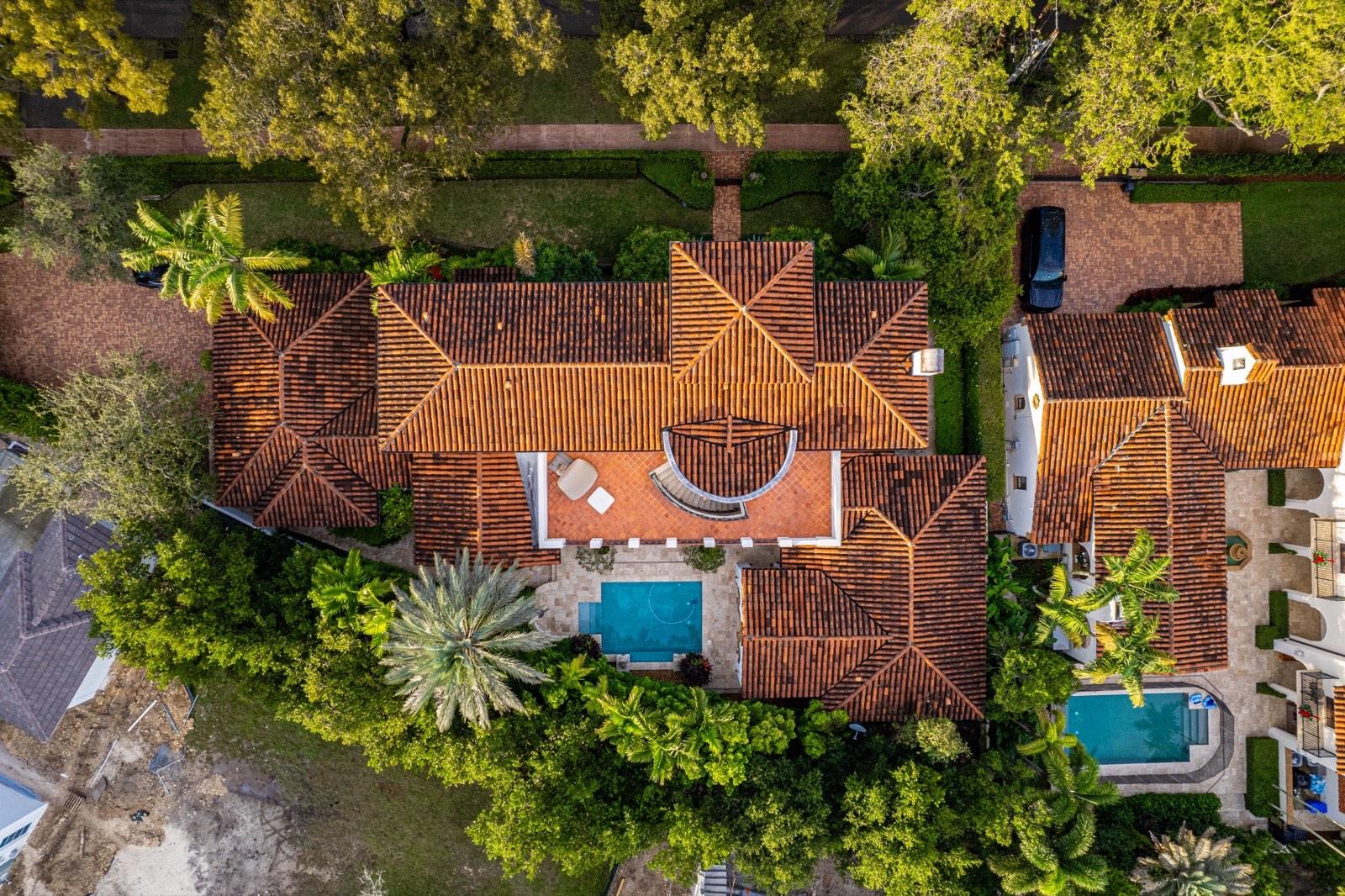
Fleming Island · Clay County
Roof Inspections in Fleming Island, FL
A focused evaluation of roof covering, flashing, penetrations, drainage and attic-side evidence, with an estimated age and remaining useful life documented for insurance or purchase decisions. We inspect your Fleming Island home and email a detailed photo report.
Mon–Sat 8am–6pm · InterNACHI certified, Florida licensed and insured · 20+ years construction and renovation experience
A roof inspection in Fleming Island covers the condition and remaining life of the roof covering, flashing and penetration detail, decking from the attic side, and evidence of prior leaks. It takes forty-five minutes to an hour and a half and produces a condition report with remaining-life estimate and photographs of every defect. Typical cost runs $125–$300 per inspection. Demand for this one in Fleming Island runs on the insurance calendar as much as the real estate calendar.
- Typical cost
- $125–$300per inspection
- Building stock
- Suburban slab
- Permitting
- Clay County
Roof Inspections in Fleming Island
Fleming Island was built fast in the nineties and early 2000s, which means an entire community is arriving at major-component replacement at roughly the same time. Roofs are on their second cycle, HVAC systems are on their second or third, water heaters are past due, and the original stucco and siding details are old enough to be leaking where they were detailed poorly. That timing is the story of this market. The reason a roof inspection in Fleming Island reads differently than one two counties away comes down to slab-on-grade construction from the 1980s through the 2000s, with original systems now at or past their service life. We are InterNACHI certified, Florida licensed and insured, and we inspect every Fleming Island home to the same standard.
Roof age and permit date come first — a lot of Fleming Island roofs were replaced after the 2016 and 2017 storms, and whether that work was permitted and re-nailed determines the wind mitigation outcome. Polybutylene supply is possible in the earliest homes here and is worth confirming rather than assuming. In the attic we check for cut truss webs, disconnected or crushed flex duct, and bath fans terminating into the attic space. Original 1990s HVAC is long gone but the second generation is often at twelve to eighteen years. On waterfront lots the dock, bulkhead, and boat lift are outside the standard scope but we look and report what we see. On a roof inspections specifically, that means concentrating on the condition and remaining life of the roof covering, flashing and penetration detail, decking from the attic side, and evidence of prior leaks.
What we run into repeatedly in Fleming Island
Doctors Lake and the St. Johns River both flood, and Black Creek to the south has a history of rising quickly in heavy tropical rainfall — Fleming Island buyers should look at the actual flood zone for the parcel rather than the neighborhood reputation. Waterfront properties add bulkhead and seawall condition to the cost picture, which is expensive and routinely ignored until it fails. Because the area is unincorporated, permits route through Clay County, and a fair amount of pool cage, lanai enclosure, and re-roof work from the mid-2000s has thin permit records. Across Eagle Harbor, Pace Island and Hibernia, these are the patterns that repeat.
Neighborhoods and landmarks
We inspect throughout Fleming Island, including the areas around Doctors Lake, Eagle Harbor Golf Club, Black Creek Trail, Doctors Lake Park, St. Johns River frontage. Median stock here runs Mostly 1990–2008, now twenty to thirty-five years old and in the middle of second-round system replacement.
- Eagle Harbor
- Pace Island
- Hibernia
- Margaret's Walk
- Fleming Island Plantation
Suburban slab-on-grade building stock in Fleming Island
Suburban slab houses look uniform and inspect anything but. The pattern that matters is timing: everything in these houses was installed the same week, so everything wears out the same decade. A 2001 house is now facing its second roof, its second or third HVAC, its second water heater, and the first serious look at its original plumbing all inside a few years. Buyers see a clean, well-kept house and assume clean systems. What we look for is the age and condition of every dated component, the attic — where truss cuts and duct problems hide — and the water management around the slab edge, which is where most of the expensive foundation and moisture complaints in these neighborhoods actually start. Grade, gutters, and a leaking irrigation zone cause more slab-edge trouble here than soil ever does.
What this building stock produces on a roof inspections
- Original HVAC systems at fifteen to twenty-five years with rusted evaporator pans, failing capacitors, and R-22 refrigerant
- Water heaters past twelve years with no expansion tank and no drain pan on second-floor closets
- Truss modifications in attics — cut or notched webs for storage decking or duct runs
- Slab settlement and plumbing leaks under slab showing as warm spots, hairline floor cracks, or unexplained water bills
- Stucco and EIFS detail failures at band joists, control joints, and window heads on 1990s–2000s homes
- Negative grading and downspouts discharging at the foundation, driving moisture under the slab edge
- Attic insulation displaced or compressed by later cable, satellite, and HVAC work
- Chinese-manufactured drywall in a narrow 2001–2009 window, identified by corroded copper and a sulfur odor
When to book roof inspections
If one of these applies to the Fleming Island property you are looking at, this is the inspection to order.
- Your insurer asked for roof documentation or a roof certification at renewal
- The roof is over 12 years old and you have no permit record for when it was installed
- There is a stain on a ceiling or a water mark on attic decking
- A named storm passed and you want a documented pre- or post-event condition record
- A roofing company knocked on your door and told you that you need a new roof
- Shingles are cupping, granules are collecting in the gutters, or you can see missing tabs from the ground
- You are buying and the seller says the roof is 'about ten years old' with nothing in writing
- Soffit or fascia is showing rot, or the drip edge is separating
Need roof inspections in Fleming Island?
Call 904-806-7679 and you get William Knight directly — the same person who will be on your roof and in your attic, and who writes the report afterward.
Mon–Sat 8am–6pm · 20+ years construction and renovation experience · InterNACHI certified, licensed and insured
What roof inspections covers
A roof inspection evaluates the covering, the underlayment where it can be observed, the deck from below, the flashings, the penetrations, the drainage, and the ventilation, then reports condition and an estimate of remaining service life. In Northeast Florida the covering is usually asphalt shingle, with concrete or clay tile and standing-seam or 5V metal on a meaningful share of homes, and a low-slope membrane over porches, additions, and flat sections. Each fails differently. Shingles lose granules, curl at the edges, lift at the tabs, and eventually go brittle. Tile rarely fails as tile; the underlayment beneath it ages out first while the tile still looks fine from the street. Metal fails at fasteners and seams. Low-slope membranes fail at seams, terminations, and standing-water areas.
Where the roof actually leaks is almost never the middle of a field of shingles. It is the penetrations and transitions: pipe boots with cracked neoprene collars, which in this climate frequently fail around year eight to twelve while the shingles have another decade in them, step flashing at wall intersections, kick-out flashing that was omitted at the bottom of a roof-wall junction and is quietly soaking the wall sheathing behind stucco or siding, valley detailing, chimney and skylight counterflashing, and satellite mounts fastened straight through the covering. On a house with any complexity, the inspection spends most of its time at these details. A whole-roof replacement is the wrong answer to a fifty-dollar boot.
Wind and storm damage assessment is its own discipline, and honesty matters here because a lot of money moves on the call. Genuine wind damage on shingles shows as creased or torn tabs, missing shingles with exposed nail heads, and broken sealant bonds where the tab lifts freely when tested. Hail bruising, less common here than in the interior South but not absent, shows as soft dark impact marks with granule loss and a fractured mat you can feel. What is not storm damage is normal thermal aging, blistering from manufacturing moisture, algae streaking (that black staining is Gloeocapsa magma and is cosmetic), or granules in the gutter of a young roof, which is shed from the manufacturing process. Documenting the difference clearly is what makes a report useful in a claim or a negotiation.
The attic side tells you more than the exterior in many cases. From below we look for daylight at the deck, staining and streaking on the sheathing and rafters, delamination of plywood or swelling in OSB, rusted fastener tips indicating condensation, active drip paths, elevated moisture readings, and the ventilation balance between soffit intake and ridge or off-ridge exhaust. Blocked soffit vents, common when insulation was blown in without baffles, are a leading cause of superheated attics in Florida summers, which cooks the shingles from underneath and shortens roof life measurably. If the deck is sheathed on the underside with spray foam, the assembly is unvented by design and gets evaluated differently, but leak detection from below becomes much harder and that limitation belongs in the report.
Remaining service life is the number that drives insurance and negotiation, so it deserves an explanation. It is an estimate, not a measurement, built from covering type and observed condition, fastener and flashing condition, ventilation quality, storm exposure, layer count, and where available the permit record for the last replacement. Most carriers want at least three years remaining to bind a policy, and many will not write a shingle roof past roughly fifteen to twenty years regardless of how it looks, with longer tolerances on tile and metal. A roof can be watertight today and still be uninsurable, which is a hard conversation but a necessary one. Better to have it during a contingency period than after closing.
Practical timing: inspect before you buy, before you list, after any named storm that produced sustained wind in your area, and roughly every three to five years otherwise on an aging roof. Expect an hour or so on a typical single-family home. We walk the roof where slope, covering, and safety allow it, which is the only way to properly evaluate fastener condition and flashing detail on shingle. On steep, wet, tile, or fragile assemblies we inspect from ladder and eave level and from the attic rather than risking damage to the covering, and the report states which method was used. Tile in particular is easy for a careless inspector to break, and cracked tiles create the very leak the inspection was meant to find.
How the inspection runs, step by step
Establish age from documentation, not guesswork
We check for a roof permit through the county building department, a contractor invoice, or the original construction date. Age is the number your insurer underwrites against, so a documented date is worth more than an estimate.
Covering and surface evaluation
Shingle condition — granule loss, cupping, curling, cracking, missing tabs, nail pops and blistering; tile for cracked, slipped or broken units and mortar condition; metal for panel deformation, fastener backout and seam condition. On coastal properties, fastener corrosion is a specific focus.
Flashing, penetrations and drainage
Valleys, step and counter flashing at walls and chimneys, plumbing vent boots, skylight curbs, and HVAC or exhaust penetrations. Cracked rubber vent boots are the single most common source of active leaks on Florida roofs and are cheap to replace and expensive to ignore. Gutters, drip edge and discharge are checked too.
Attic-side inspection
The decking underside tells the truth. He looks for staining, delamination, daylight at penetrations, rusted fastener tips indicating condensation, sagging between trusses, and ventilation adequacy at soffit and ridge. A roof that looks fine from above and shows dark staining below has been leaking.
Documented condition and remaining life estimate
You get a photographed report with an estimated remaining useful life — the figure insurers and buyers both ask for. It is an estimate based on observed condition and covering type, stated as such, not a warranty of how long the roof will last.
Plan on forty-five minutes to an hour and a half. The report is a condition report with remaining-life estimate and photographs of every defect, which matters when you are working against a deadline — this is normally before a purchase, before a policy renewal, or after a storm to establish condition. Same-week appointments are usually available across Fleming Island and the surrounding Clay County.
Roof Inspections cost in Fleming Island
A roof inspection in Fleming Island typically runs $125–$300 per inspection. Where a specific job lands depends on roof size, pitch, number of levels and complexity of the roof planes, covering type — tile and metal take longer to evaluate carefully than three-tab shingle and whether it's bundled with a wind mitigation, 4-point or full home inspection on the same visit. We quote before we schedule, not after — you will know the number before the appointment goes on the calendar. Call 904-806-7679 and we can usually give you a figure on the phone.
Typical Northeast Florida range
$125–$300 per inspection
What moves an inspection within that range:
- Roof size, pitch, number of levels and complexity of the roof planes
- Covering type — tile and metal take longer to evaluate carefully than three-tab shingle
- Whether it's bundled with a wind mitigation, 4-point or full home inspection on the same visit
- Attic accessibility for the underside evaluation
- Travel distance within Northeast Florida
- Whether permit research is needed to establish the installation date
That is a typical range, not a quote. Call 904-806-7679 for a firm price on your address.
Clay County: permitting, wind, flood and insurance
Permit records for Fleming Island are held by Clay County Building Division (Development Services).
Unincorporated Clay County — which includes Fleming Island, Middleburg, and most of the Orange Park mailing area — permits through the Clay County Building Division out of the Development Services building in Green Cove Springs. The Town of Orange Park and the City of Green Cove Springs issue their own permits inside their municipal limits. Re-roofs, window and door replacement, HVAC changeouts, water heaters, service panel work, additions, pools, and screen enclosures all require permits. Clay has a lot of owner-built additions and detached shops on larger lots, and permit history is the first thing we want to see on anything that looks self-performed. Because Fleming Island sits in Clay County, Clay County Building Division (Development Services) holds the permit record — worth checking against anything a roof inspection flags as newer than the house.
Clay County is inland, and it carries the lowest wind design numbers in our service area alongside Putnam. Ultimate design wind speed for a Risk Category II home sits in the low band of the Florida Building Code map — meaningfully below the coastal counties east of it. The Building Division confirms the governing value at permit review, since the contours run across the county rather than following the county line. Clay County is not on the coast and generally falls outside the Florida Building Code wind-borne debris region, so impact glazing and shutters are not code-required on typical new residential construction here. That has a direct insurance consequence buyers do not expect: on a wind mitigation report, a Clay County home usually scores no opening protection, because none was ever required. The credits available here come from roof shape, roof deck nailing, roof-to-wall connection, and roof covering compliance instead.
Clay's flooding is riverine and creek-driven, not surge-driven. Black Creek, Doctors Lake, and the St. Johns River corridor all have mapped flood zones, and Black Creek in particular has a history of rising fast in a heavy tropical rain event. Outside those corridors, most of the county is high and dry — but low-lying lots in older Middleburg subdivisions still take water.
Clay County homes get the same two insurance inspections as the coast: a 4-point on older dwellings and a wind mitigation report on form OIR-B1-1802. Requirements vary by carrier, so confirm with your insurance agent, your realtor, or your lender whether a 4-point is needed — we can include it with your inspection. Because opening protection is rarely present, the wind mit outcome in Clay usually turns on the roof. A hip roof, a re-nailed deck with 8d nails, and documented roof-to-wall straps or clips can move a premium substantially; a gable roof over a 1990s deck nailed with staples or 6d smooth-shank nails will not. That is worth knowing before you buy, not after renewal. Keep that in mind when you decide how quickly to schedule.
Why this is worth doing properly
- You get an independent opinion from someone who does not sell roofs and has nothing to gain from replacement
- Documented age and remaining life is what your carrier needs to keep or write a policy
- Small, cheap failures — vent boots, sealant, loose flashing — get caught before they become sheathing and drywall damage
- Buyers get a real number to negotiate with instead of the seller's estimate
- The attic-side evidence catches leaks that a surface-only look would miss entirely
What Northeast Florida clients say
Published on the High Tide Inspections Google Business Profile.
“William was professional and thorough. He was able to schedule the appointment within the timeline I needed and delivered the wind mitigation inspection report that same day. I would recommend High Tide Inspections for anyone needing his services.”
D Rappvia Google · “William was extremely professional and thorough throughout the entire process. He was able to schedule the appointment within the timeline I needed and delivered both the 4-Point and full home inspection reports the following day.…”
Excerpt — Google truncates longer reviews in its listing. Read the full review on Google (opens in a new tab).
Christa Teddervia Google · “As a Realtor, I really appreciated how thorough and professional High Tide Inspections was during this new construction inspection. William provided a detailed, easy-to-read report with great photos and clear explanations.…”
Excerpt — Google truncates longer reviews in its listing. Read the full review on Google (opens in a new tab).
Coral Babb · Realtorvia Google ·
Worked with us?
A short, honest review on Google helps the next homeowner decide who to call.
Reviews are published on the High Tide Inspections Google Business Profile and are reproduced here word for word.
Roof Inspections in Fleming Island: common questions
How much does a roof inspections cost in Fleming Island?
Typically $125–$300 per inspection in Fleming Island. The variables are roof size, pitch, number of levels and complexity of the roof planes, covering type — tile and metal take longer to evaluate carefully than three-tab shingle and whether it's bundled with a wind mitigation, 4-point or full home inspection on the same visit. Because Fleming Island is suburban slab-on-grade building stock, square footage and the number of systems in scope set the range. Call 904-806-7679 for a firm number before you book.
How long does a roof inspections take in Fleming Island?
Forty-five minutes to an hour and a half. You get a condition report with remaining-life estimate and photographs of every defect. We schedule across Fleming Island and the rest of Clay County, and same-week appointments are normally available.
What does a roof inspections find in Fleming Island homes?
Suburban slab houses look uniform and inspect anything but. The findings that repeat here are original hvac systems at fifteen to twenty-five years with rusted evaporator pans, failing capacitors, and r-22 refrigerant, water heaters past twelve years with no expansion tank and no drain pan on second-floor closets, truss modifications in attics — cut or notched webs for storage decking or duct runs and slab settlement and plumbing leaks under slab showing as warm spots, hairline floor cracks, or unexplained water bills. Roof age and permit date come first — a lot of Fleming Island roofs were replaced after the 2016 and 2017 storms, and whether that work was permitted and re-nailed determines the wind mitigation outcome.
Do I need a permit record for work found during a roof inspections in Fleming Island?
Permit history in Clay County is held by Clay County Building Division (Development Services). An inspection tells you what condition something is in; the permit record tells you whether it was ever inspected by the jurisdiction. On additions, re-roofs, electrical upgrades and enclosed porches, checking both is worth the hour it takes.
Who performs the roof inspections in Fleming Island?
High Tide Inspections. We are InterNACHI certified, Florida licensed and insured, Certified Wind Mitigation Inspectors, Certified Roof Inspectors and 4-point certified, with 20+ years of construction and renovation experience behind the report. Call 904-806-7679.
How much does a roof inspection cost?
Typically $125 to $300 as a standalone visit in Northeast Florida, and less when bundled with a wind mitigation or full home inspection. Complex tile or multi-level roofs sit at the higher end.
How long does a roof last in Northeast Florida?
Architectural asphalt shingle commonly runs 15 to 25 years here, three-tab less, tile and metal considerably longer with maintenance. Coastal and barrier island exposure shortens all of it — UV load, salt air and wind-driven rain are harder on a roof in Jacksonville Beach than the same product inland. Age alone doesn't condemn a roof; condition does.
Will an insurance company require a roof inspection?
Frequently, on older roofs. Many Florida carriers now request roof documentation or condition verification at renewal once a roof passes a certain age, and roof condition is one of the four systems on a 4-point inspection. A roof documented with roughly three years or less of remaining life will generally block a new policy.
Do you walk the roof?
When it is safe and the covering allows it, yes — walking gives the most accurate picture. Steep pitch, wet conditions, brittle tile or fragile aging shingle can make walking unsafe or actively damaging, and in those cases the roof is evaluated from ladder and eave level, from the ground with optics, and from the attic side. The report states which method was used.
How is this different from a roofing contractor's free inspection?
A roofing contractor's inspection is a sales visit, and their answer is a roof. We do not sell, install or repair roofs. We document condition and remaining life, and if the answer is 'this roof has eight good years left and needs three vent boots,' that's what the report says.
Who does the work
When you call 904-806-7679 you are talking to the lead inspector, and when the report arrives it was written by the person who was standing in the attic.

William Knight — Owner & Lead Inspector
Serving Northeast Florida from St. Augustine. Monday–Saturday, 8:00am–6:00pm.



Experienced inspectors, start to finish
The person who looks at the roof is the person who writes the report, and you can call and talk it through with us afterwards. Every inspection follows the InterNACHI Standards of Practice, so you know exactly what is covered.
InterNACHI certified, Florida licensed, insured
Certified Wind Mitigation Inspector and Certified Roof Inspector as well, which is what lets a single visit cover both the buyer's questions and the insurance carrier's forms.
20+ years construction and renovation experience
Two decades of building and renovating homes before inspecting them. That is the difference between noting a crack and telling you whether it matters, what caused it, and roughly what it takes to put right.
A detailed photo report, emailed quickly
Every finding is photographed and explained in plain language, organised so you can hand it straight to your agent, your carrier, or a contractor for pricing. No padding, no scare tactics, no upsell.
Other inspections in Fleming Island
We cover the full range of inspection work in Fleming Island and across Clay County.
Roof Inspections in nearby areas
The same inspection in neighbouring Northeast Florida communities.
Related inspections
- Wind Mitigation InspectionsThe Florida OIR-B1-1802 Uniform Mitigation Verification Inspection — documenting the seven construction features carriers use to apply windstorm premium credits.
- 4 Point InspectionsThe insurer-required condition report on a home's four risk systems — roof, electrical, plumbing and HVAC — used to decide whether a policy gets written or renewed.
- Home InspectionsA full, non-invasive evaluation of the home's structure, roof, electrical, plumbing, HVAC, exterior, attic and interior, documented with photos in a PDF report emailed the same day or next morning.
- Pre-Listing Home InspectionsA seller-side inspection done before the home hits the market, so you find and price the problems on your schedule instead of discovering them during a buyer's contingency period.
Looking for something else? See all home inspections in Fleming Island, the Roof Inspections overview, or browse every service area.
Schedule roof inspections in Fleming Island
Tell us the address and your closing date and we will give you a firm price and the first date we can be there.
Mon–Sat 8am–6pm · 20+ years construction and renovation experience · InterNACHI certified, licensed and insured